Danish scientist Hans Henrik Bruun recorded 45 gall midge species new to Estonia during a week-long field trip, revealing how...
ESTONIAN ACADEMY
PUBLISHERS
PUBLISHERS

eesti teaduste
akadeemia kirjastus
akadeemia kirjastus
Danish scientist finds 45 gall midge species new to Estonia in a single week
15 October 2026
A study by Danish scientist Hans Henrik Bruun, published in the journal Proceedings of the Estonian Academy of Sciences, reports plant-feeding gall midges (Cecidomyiidae: Cecidomyiinae) from Estonia for the first time. During a week-long field trip, he recorded 45 species new to the country.
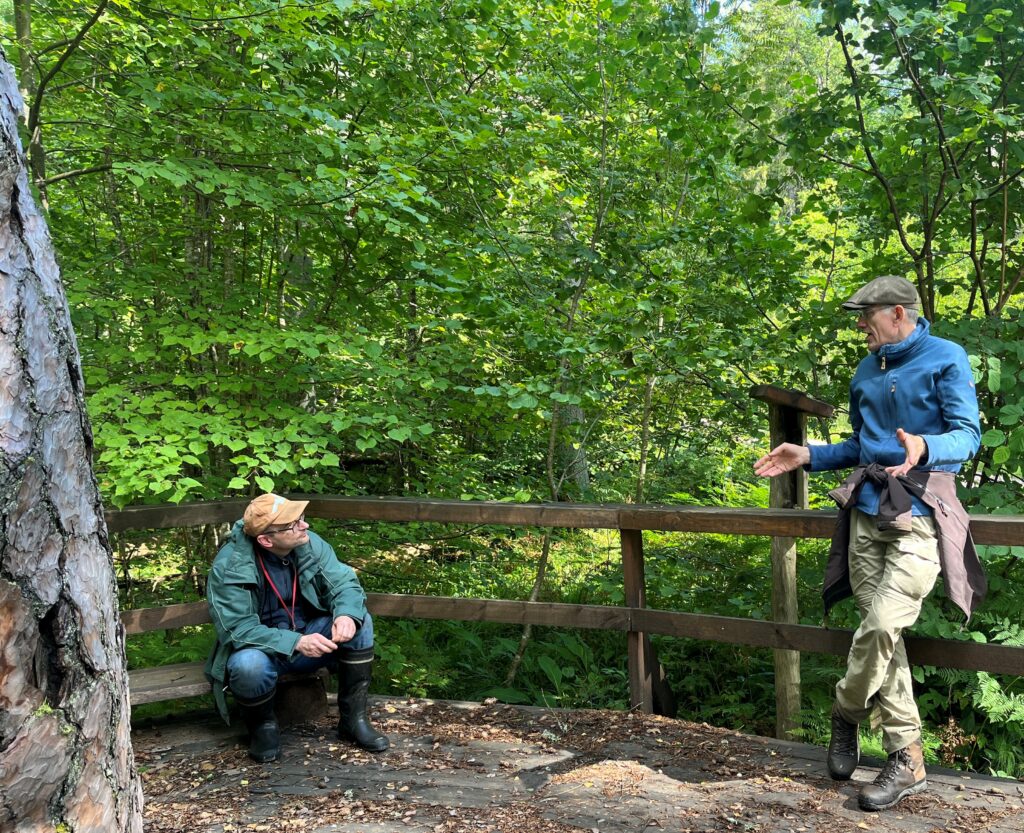
Photo: Kadri Runnel
The study’s author, Hans Henrik Bruun, is a professor in the Department of Biology at the University of Copenhagen, whose main research areas are community ecology, biodiversity, and conservation biology. Gall midges are one of his long-standing side interests: over the years, he has published a series of papers on new species records in his native Denmark and in other European countries such as Finland, Austria, Germany, and Spain, steadily adding species to those countries’ known checklists. The new study follows the same pattern, now extending it to Estonia.
Bruun came to Estonia at the invitation of Kadri Runnel and Asko Lõhmus from the University of Tartu. He visited 18 sites across Estonia from 18 to 24 August 2025, surveying alvar grasslands, wooded meadows, salt marshes, floodplain wetlands, swamp forests, and urban areas, from Lääne-Nigula to Saaremaa and Muhu, and from Soomaa and Tartu to Põlva and Rae. Before his study, 152 gall midge species were known from Estonia, a number reached thanks to the Estonian Malaise Trap Project. All of them, however, belonged to subfamilies other than Cecidomyiinae. The mainly plant-feeding subfamily Cecidomyiinae had never been investigated in Estonia, and not a single species had been recorded from the country.
Bruun’s own fieldwork yielded 45 species new to Estonia. By adding reliable records of further species from citizen science portals (iNaturalist and eElurikkus) and the GBIF database, he compiled a preliminary checklist of 70 species for Estonia, two of which were identified to genus level only. Eight of the species he recorded, among them Dasineura myosotidis, Geocrypta braueri, and Semudobia skuhravae, had not previously been known from any of the three neighbouring territories: Latvia, Finland, or Leningrad Province.
Who are gall midges?
Gall midges (Cecidomyiidae) are small flies (Diptera), usually only a few millimetres long, and belong to a species-rich family with diverse life histories and feeding niches. The adults are short-lived, usually surviving only a few days, and their main task is to reproduce. In plant-feeding species, the larvae live and develop inside a gall on the host plant: a deformed, often fleshy or woody growth that the larva induces through its feeding or through chemical substances. The gall provides the larva with both food and shelter from predators. Almost all plant-feeding species are narrowly specialised, tied to a single host plant and, in addition, to a single plant part (a bud, leaf, flower, stem, or similar), each producing a characteristic gall. As a result, species are often identified by the shape of the gall and the characteristics of the larva rather than by the appearance of the midge itself.
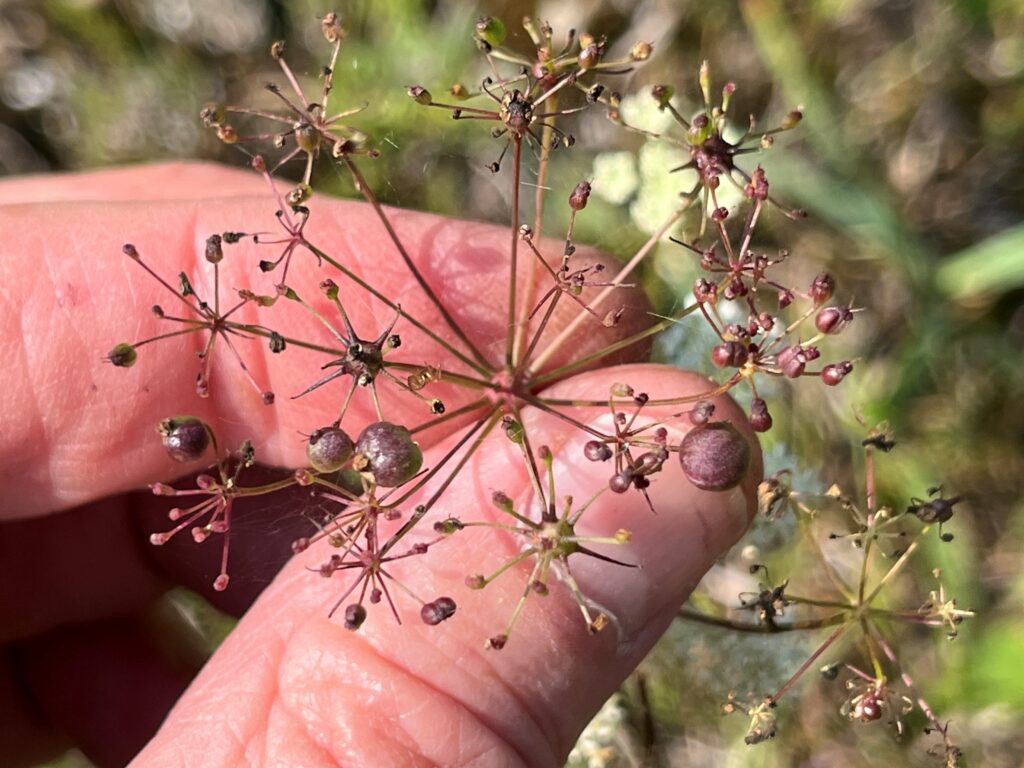
Photo: Hans Henrik Bruun
The family is also one of the world’s least studied insect groups. The global checklist currently lists 6,887 species in 816 genera, but this number has been estimated to represent less than one per cent of the family’s true species richness. The European fauna is considered relatively well known by continental standards, but the level of knowledge varies greatly between countries. For plant-feeding gall midges, Estonia was until now a complete blank spot.
According to Bruun, most gall midges have inconspicuous lifestyles and easily go undetected by untrained human observers. He points out that citizen science portals, where users’ observations documented with mobile phone photos can be identified, offer brand new opportunities for recording gall midges and other insect groups that are difficult to identify without specialist taxonomic knowledge. The 45 species found to be new to Estonia in just one week and the preliminary checklist of 70 species show how little is known about Estonia’s gall midge fauna. In Bruun’s words, the study is “but a first stab” at investigating it, and it calls for more intensive recording that combines traditional methods with modern DNA barcoding.
The study “A first stab at investigating the Estonian fauna of gall midges (Diptera: Cecidomyiidae: Cecidomyiinae)” appears in issue 4 of the 2026 volume of Proceedings of the Estonian Academy of Sciences (75(4), 280–284).
DOI: https://doi.org/10.3176/proc.2026.4.02
Read the article in Proceedings of the Estonian Academy of Sciences.
The study was also featured on Novaator, the science news portal of Estonian Public Broadcasting (ERR) (in Estonian).
|

|