PUBLISHERS

akadeemia kirjastus
Alar Konist, the new editor-in-chief of the journal Oil Shale, is Director of the Department of Energy Technology at Tallinn University of Technology (TalTech), a tenured professor, and head of the Sustainable Energy and Fuels research group. He is a strong advocate in his field: in October, ERR’s opinion portal published his article on Estonian energy policy in the new geopolitical situation. In this interview, we take a look behind the scenes of the oil shale industry and talk about the journal and its editor-in-chief.
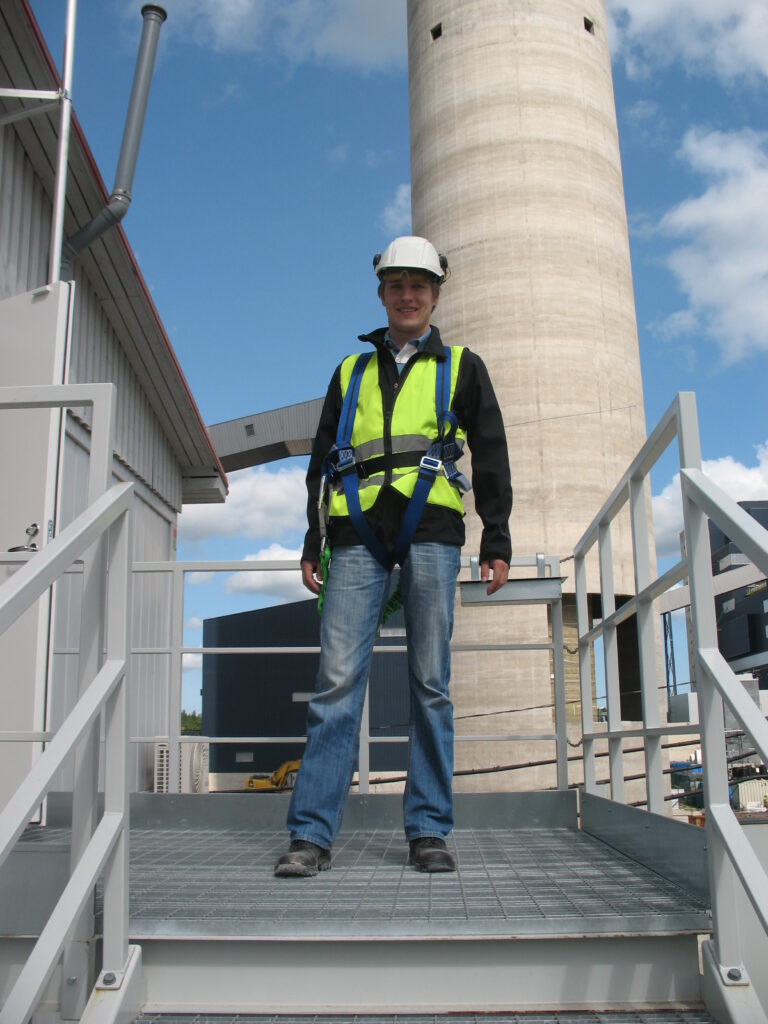
Photo: Tõnu Pihu
How did you come to oil shale?
I grew up in Lääne-Viru County and graduated from Rakvere Gymnasium. I ended up at Tallinn University of Technology purely by chance. I applied to all the major universities in Estonia, and at the other universities, my preferences were physics and mathematics. But I am quite a pragmatic person, my father is a farmer, and I thought I would choose a field where jobs were secure and the pay might be above the Estonian average.
I wanted to study shipbuilding at the University of Technology. However, I turned up at the admissions office at lunchtime, when the right people were not at the desk to provide information. The person at the desk at that moment, perhaps the cloakroom attendant, said that shipbuilding probably was not on offer, but that there were some brochures. I looked through them, saw thermal engineering, and chose that. I was also accepted to study mechatronics, but fortunately my chance choice won out. I thought thermal engineering would involve engines, but it turned out there was not much talk of engines at all. Life shows you the right direction. I wanted to earn some extra money alongside my studies and asked whether I could contribute at the Department of Thermal Engineering. They said yes. My first job was helping out on large projects where tests were carried out on oil shale boilers. In my first years at university, I spent a lot of time at the Narva power plants and their ash fields. That gave me a good overview of what the industry is like and what its environmental impact is.
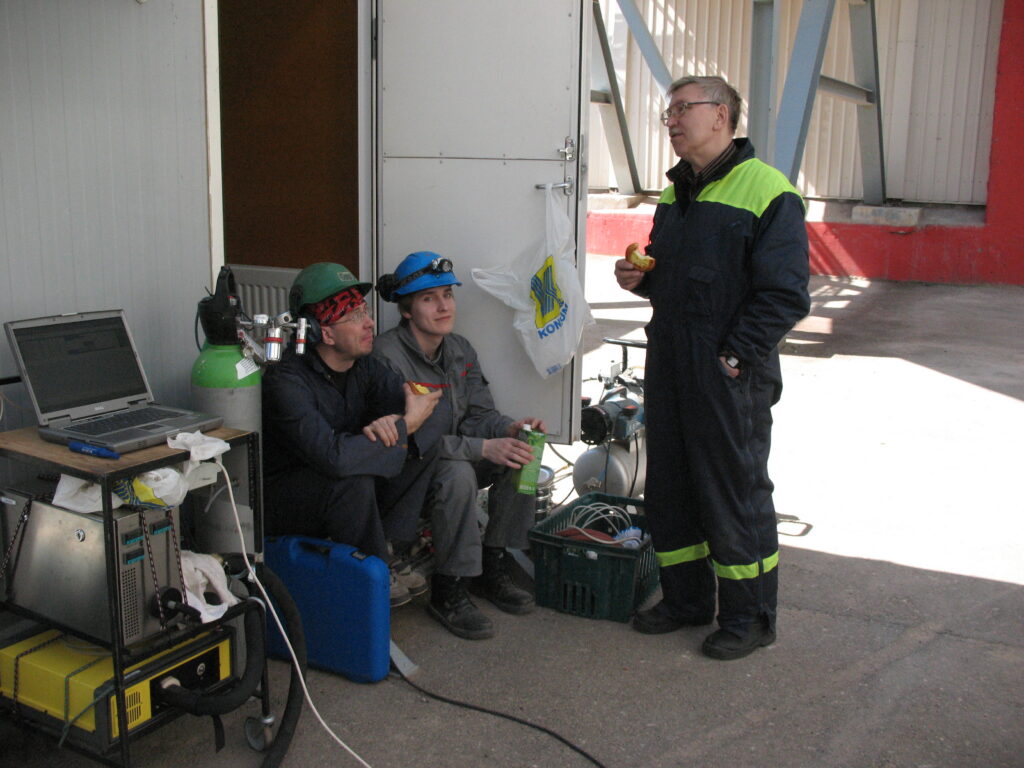
Photo: Tõnu Pihu
What has kept you working with oil shale?
Even then it was clear that our work as scientists is precisely about reducing environmental impact, and that it produces real results. We are not talking about tiny changes, but about major reductions. My predecessors studied circulating fluidised bed technology, which was introduced on an industrial scale in Estonia in 2003-2004. It reduced sulphur dioxide emissions, for example, by a factor of thousands.
Achieving something like that simply by changing combustion technology is fantastic. Elsewhere in the world, desulphurisation and denitrification equipment is needed in addition; we do not need it. However, as environmental impact is now assessed solely by CO2 emissions, oil shale’s figure is on the high side. The reason is the limestone in oil shale, which releases CO2 as it decomposes, in addition to the CO2 produced by burning the fuel. Even so, this figure is no higher for fluidised bed boilers than for coal-fired boilers, although the opposite is often claimed, and at new plants such as Auvere it is even lower. Considering that other emissions are much lower, this is a very good technology.
We are now studying new CO2 capture technologies. We have two projects under the TemTA programme, in which we are looking at how to obtain chemicals and other useful products, such as hydrogen, and how to add value to the solid material so that it is suitable for use in cement production, as a mineral fertiliser, or as a soil improver. In this way, using oil shale produces few emissions, or none at all.
I have never seen oil shale as a problem, but as an opportunity. This resource gives Estonia the chance to be independent of external factors. The geopolitical situation is very complicated today, and I would not want to be in Europe’s position. We did everything we could to stop Europe from buying gas from Russia and replaced it with American gas. Recently, the United States decided to allow Russian diesel onto its market and advised Europe to start buying Russian gas as well.
Political circumstances change quickly.
Exactly. If we are dependent and do not do what the major powers want, they simply will not supply us with fuel. The second risk is technological dependence: if something breaks in a solar panel, you may not be able to get the components, and nobody may want to repair it. So oil shale is, if anything, our good fortune.
Things can always be done better, but that is up to us. If some part of this resource is still treated as waste today, that should not be the case. The entire resource should be used across the whole value chain. For example, we have just filed a patent application for producing ternesite clinker from oil shale ash, and we came across this idea thanks to the accidents at Auvere Power Plant. Negative events can also have positive consequences.
The Auvere story still makes me sad. I once wrote about it in Riigikogu Toimetised, the journal of the Estonian Parliament. Had Auvere been built first, the conclusion would have been that fluidised bed technology is not suitable for oil shale. Yet the second-generation fluidised bed boilers built in 2003-2004 are still operating today, and nobody even knows that such problems could arise. Auvere, however, has a first-generation boiler. There were also problems at the Enefit280 oil plants, because, once again, the basic knowledge was lacking and local expertise was not valued. That is why I say Estonia must have specialists in every field. We can bring in geologists from Finland, but if they do not know our bedrock, they will still end up asking our specialists.
Is your belief in oil shale also the reason you have served on the editorial board of Oil Shale and are now its editor-in-chief?
I do have a sincere belief in oil shale, but I have always looked at it in a broader context. If most of the world’s primary energy is based on fossil fuels, and investment in them shows no sign of slowing, there is no point in thinking that this will change overnight. So we should not shut down this sector prematurely. As recently as 2018, Estonia’s electricity imports and exports were more or less in balance; today we are moving towards a situation similar to that in the rest of Europe, where primary energy imports are around 57 per cent. That means someone else produces and pollutes for us. But the world is a system of communicating vessels, and our steps do not reduce emissions globally; if anything, they increase them.
So we should produce the energy we consume here locally. After all, our eastern neighbours do not think about environmental issues in this way at all. The ideology was a nice one: Europe knew it was heavily dependent on imported fuels and sought an alternative in electrification, electric cars, and local production of wind turbines and solar panels. It was also assumed that batteries would be able to store the energy needed for the winter months. In reality, that is not the case.
But Europe failed to notice that, at the same time, China saw a very concrete business opportunity in all this. Today, China’s production capacity for wind turbines, solar panels, electric cars, batteries, and electrolysers exceeds the needs of the entire world. When energy in China costs less than half as much as it does here and labour costs are even lower, we will never be able to compete with their prices. And so Europe finds itself in a position where it does not want the old and does not have the new. Now hasty decisions are being made to replace old plants with new ones, in the hope that we will switch on gas-fired plants that we will not use for long. In reality, that will not happen. This is confirmed by the fact that subsidies for gas-fired plants are being planned for at least 15 years.
You run a department and a research group, and you are a professor. Why did you also agree to become editor-in-chief of a journal published by Estonian Academy Publishers?
I must praise the publisher’s director, Piret Lukkanen, who was very persistent. My first wish, however, was that the previous editor-in-chief, Andres Siirde, would continue, because he has done a very good job: the journal’s indicators have improved, and the number of submitted articles has grown. In truth, I have too many responsibilities. But oil shale is a subject many people do not want to see on their CVs, and I do not want to see the work of previous generations thrown into the dustbin of history in today’s political climate. I felt responsible for this field. I hope the journal will continue at the same high level and that in five years I will be able to hand it over to the next editor.
Very few international scientific journals are published in Estonia. We should preserve and value them, because achieving the status of an international journal is a long process.
Besides the editorship, you have also taken over the management of the Department of Energy Technology from TalTech Professor Emeritus Andres Siirde. What have you learnt from him, and what would you like to carry forward from his work?
Andres handed over to me both a department and a journal in very good shape. That says a great deal about him. Everything he does, he does with great passion, heart, and dedication. That is exactly the attitude to work that I want to carry forward myself.
One of his most admirable skills is his ability to give examples that help people genuinely understand complex matters and processes. It is a skill from which there is much to learn, as a lecturer, as a scientist, and as a leader.
Andres also knows how to build and maintain good relationships with people. He gets on well with all three oil shale processing companies operating in Estonia. I, too, try to maintain good and substantive cooperation with everyone. I want to build on the strong foundation he created and one day pass on the department and the journal in at least as good a condition as I received them from him.
Who publishes in Oil Shale, and who reads it?
There has been quite a big change. In the past, a great many articles came from Estonia; today they come from China. The number of articles from Jordan has also grown, because an oil shale power plant was commissioned there and they now have something to study. The Chinese are very active. China has rigorous requirements for scientific articles and its own lists of journals where to publish, so it is great that they send their articles to us. We must work hard to keep it that way. The number of Estonian articles has fallen for a simple reason: if there is no research funding for oil shale, not much research can be done in the field.
Is there hope of more funding in the future?
I hope so too. But a great deal of damage has been done. The oil shale field has been demonised, and young Estonians are not keen to take up oil shale research. People think it is something terrible, but at the end of the day it is one of the possible choices.
Fields have changed over the years. Could the journal in future also cover energy technology, the circular economy, or environmental technologies more broadly?
These are all interconnected, and there have already been such articles, on ash reuse, for example. Life cycle assessments have also appeared, showing that when you look at the whole chain, oil shale can be valorised in a very environmentally friendly way. Articles like these are very welcome.
I would also like to see a socio-economic article examining the changes in the sector since Estonia regained independence, why and how they have had an impact, and where we stand now, together with an outlook for the future in the context of Estonia, Ida-Viru County, and the world. Charity begins at home. If we do not even share common values when it comes to human life today, why do we think we will agree on the environment? In the meantime, it was promised that tourism and the Just Transition Fund would save Ida-Viru County, but that is not how things have turned out. Rather, we should think about how to reduce the environmental impact already caused without harming the local community. If we shut down the sector and replace it only with imported fuels, prices will rise and local people will be left without work.
Looking ahead, we also need to look beyond Europe. The development of the world’s energy sector and industry is strongly influenced by the United States, China, India, and Russia, whose interests and choices may not coincide with ours. If countries cannot agree even on protecting human life and on preventing and ending wars, we cannot expect a shared understanding of and responsibility for environmental goals to emerge on their own. This does not diminish our obligation to reduce our own environmental impact, but it does force us to ask whether our decisions reduce that impact at a global level as well, or simply move jobs, production, and their impact elsewhere. These are exactly the kinds of links between the environment, technology, the economy, and society that the journal could explore more than it has so far.
There are few young people in Estonia, and some of them leave. How can more young people be drawn to the oil shale field?
We need to start in schools and talk honestly about both the problems and the opportunities. There is no point in waiting for a ship with blue sails, and perhaps young people’s knowledge of history needs refreshing. When we look at what is happening in Ukraine, the situation seems similar to the one during the Second World War, when we waited for America to come to our aid. It did not come. Everyone saves themselves, and in that context we have to consider whether switching to something else is sensible.
I am not against nuclear energy, because I know how much coal, oil shale, and oil there is in the world. The only energy source with fuel reserves lasting tens of thousands of years is nuclear energy, and we will get there in time. But over the next 30 or 50 years it does not make sense. If the rest of the world wants to switch quickly to gas and nuclear energy, the construction costs of plants will rise and their availability will decline. We could take our time over the next 30 to 50 years, and if by then we are told that oil shale must not be used, then we will not use it. Otherwise, we will make ourselves dependent on technology and nuclear fuel coming from third countries whose policies we may not like. And afterwards we could be blackmailed over nuclear waste, because it has to be stored somewhere.
Today, the Norwegian model should be our example: the country that invests most in renewable energy in Europe is Norway, and the largest producer of fossil fuels is also Norway.
How long will Estonia’s oil shale last?
When I started studying at Tallinn University of Technology, we were told it would last for the next 50 years. And today I can say exactly the same: for the next 50 years.
Is that because not so much has been used up, or because technologies have changed?
Both. Extracting oil shale and opening new mines can be challenging in some cases, but mining technologies are changing too. This resource is still something that can and should be valorised and used.
Of course it affects local residents; I do not dispute that. But we need to understand how many people it affects and find solutions. In the same way, there are settlements along the Rail Baltica route, and the necessary concessions have been made there.
Presumably there is no escaping new ash heaps?
We might be able to avoid them. My dream is that we will put the ash to use after all. Here, too, political decisions have worked against the development of the field. Europe does not fund research on fresh ash, because such research is seen as an attempt to find ways to keep the existing industry going. Money is only given for studying ash that has already been deposited. This is short-sighted, because if you can obtain the ash in dry form, it can be used in a wide range of fields. Political ambition is needed here as well.
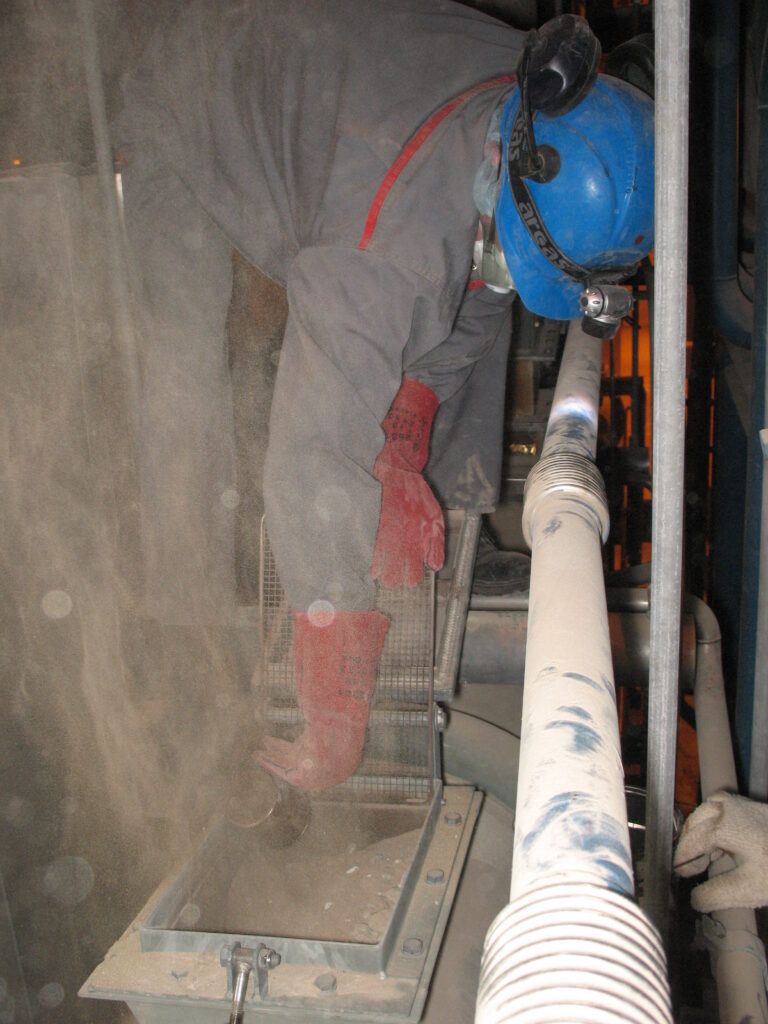
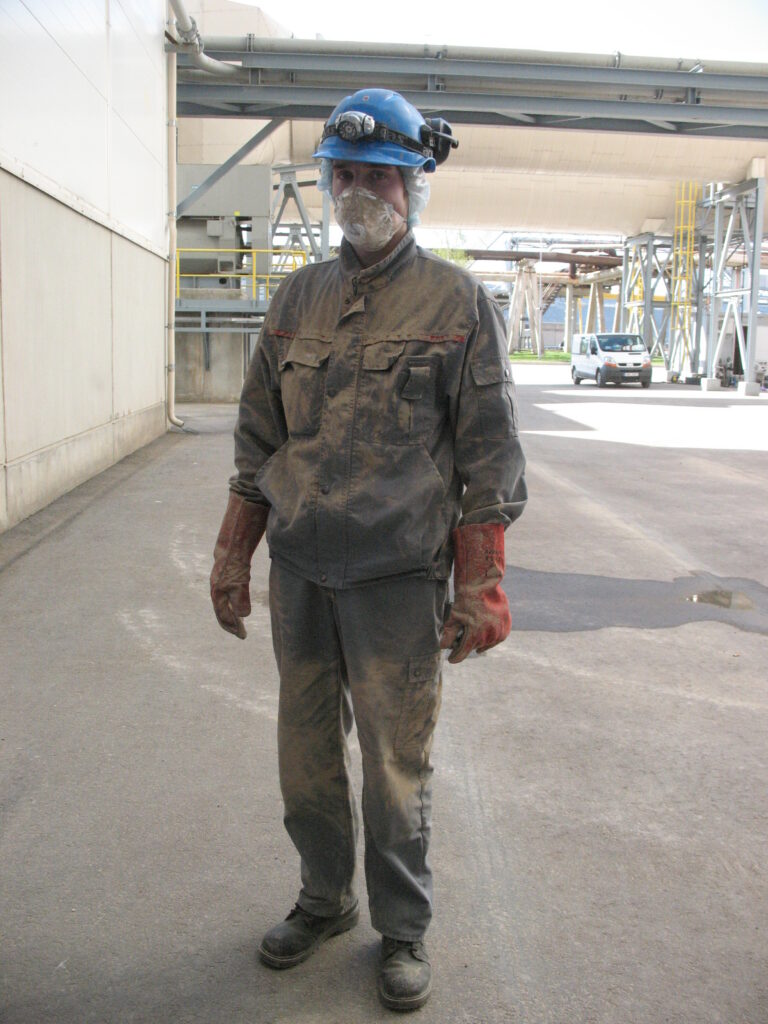
Taking ash samples during the same test series at the Balti Power Plant in spring 2010.
Photos: Tõnu Pihu
What would you advise a researcher, young or more experienced, who is considering submitting an article to Oil Shale? Why there?
I definitely recommend it. On the one hand, it may be our weakness, but on the other, it is our strength that we are a niche journal where oil shale articles are gathered together. You can find the latest oil shale research there in concentrated form. There are thousands of scientific journals in the world, and even AI does not always help you find the articles you need quickly. In our journal, all the articles on a narrow topic are in one place, and the journal is read by the leading researchers in the field.
The editor-in-chief’s term is five years. Where will the journal be by then?
My ambition is for us to become a Q1 journal. That will take a lot of work. As I also told the Board of the Academy, it is a high ambition, and if I do not achieve it, they will have a good opportunity to choose a new editor-in-chief in five years.
What does Q1 mean?
Within their respective fields, scientific journals are divided into four groups, or quartiles, from Q1 to Q4, based on citation metrics. Q1 means that a journal is among the top 25 per cent in its field in the relevant ranking. It indicates the journal’s scientific impact, but it is not an assessment of the quality of each individual article. Competition to publish in leading journals is fierce, and besides the quality of the research, its novelty and suitability for the journal’s scope also count. Our goal is to increase the international visibility and citation impact of Oil Shale and move higher in the rankings. At present, the journal is in Q3.
Will the journal still be printed on paper in five years?
I hope so. I am an old-school person; I like reading on paper.
In five years, will articles be written by AI or still by humans?
Still by humans. Oil Shale’s guidelines also state that AI may be used to improve the language of a text, but a scientific publication must not be produced with AI. It may be used to some extent in interpreting results, but the research itself must be done by scientists. Otherwise, there would be no need for scientists.
Will the oil shale field be more visible in Estonia in five years thanks to the journal?
Certainly. The publisher has already significantly improved visibility, and media coverage helps results reach the wider public. I hope people will understand what we do.
The journal Oil Shale
- Founded in 1984 as a joint journal of the Academies of Sciences of the USSR and the Estonian SSR; its first editor-in-chief was Ilmar Öpik.
- Originally published in Russian with English summaries, it is now published in English.
- Published by the Estonian Academy of Sciences in cooperation with Tallinn University of Technology and the Geological Survey of Estonia; publication has been managed by Estonian Academy Publishers since 1999.
- Published four times a year, with open access and articles published under a CC BY 4.0 licence.
- All articles undergo international peer review.
- Indexed in Web of Science (since 1994), Scopus, DOAJ, and other databases.
- Impact factor 1.9 and CiteScore 2.5 (2025).
- Alar Konist has been editor-in-chief since 22 October 2026; his predecessor, from 2019 to 2026, was Professor Emeritus Andres Siirde.
Who is Alar Konist?
Alar Konist (born in 1985 in Vinni) began studying thermal engineering at Tallinn University of Technology in 2004 after graduating from Rakvere Gymnasium, and in 2006 started working at the Department of Thermal Engineering, now the Department of Energy Technology. He defended his doctoral thesis on the environmental aspects of oil shale power engineering in 2013 and was a postdoctoral researcher at Brown University in the United States in 2014-2015. He became a professor in 2018. He represents Estonia in the International Energy Agency’s Technology Collaboration Programme on Fluidized Bed Conversion and received the President’s Young Scientist Award in 2021.
Interview by Airi Kaunissaare.
The Poluverniki, the so-called half-believers who lived in the Iisaku area on the northern shore of Lake Peipus, have long been thought to descend from a Votic population. A study by linguists at the University of Tartu shows, however, that the Poluverniki’s language also had features similar to those of the Northern Finnic languages. One of the most striking was the absence of the vowel õ.
The study’s authors, Petar Kehayov, Professor of Finnic Languages at the University of Tartu, and Karl Pajusalu, Professor of the History and Dialects of the Estonian Language at the University of Tartu and a member of the Estonian Academy of Sciences, published their findings in Linguistica Uralica, a journal of Estonian Academy Publishers.
The missing õ
Kehayov and Pajusalu analysed language material collected by Mari Must and Helle Heiter between 1962 and 1965, as well as word lists of Poluverniki Russian compiled by Jüri Truusmann in 1895.
The vowel õ was entirely missing from the speech of older residents of Vaikla and Liivaküla, even though frequent use of õ is characteristic both of the neighbouring Alutaguse dialect and of Votic. It was replaced by various vowels, as in sona ‘word’ (Estonian sõna) and nuges ‘nettle’ (Estonian nõges). Somewhat as in Finnish, they said menema ‘to go’ (Estonian minema), nena ‘nose’ (Estonian nina), laiv ‘ship’ (Estonian laev) and kaiv ‘well’ (Estonian kaev).
The authors conclude that the ancestors of the Poluverniki spoke a language close to the coastal dialect of northeastern Estonia, particularly the Central Vaivara subdialect. As Vaikla lies 42 kilometres from the coast of the Gulf of Finland, these Northern Finnic features may once have extended further inland than previously thought.
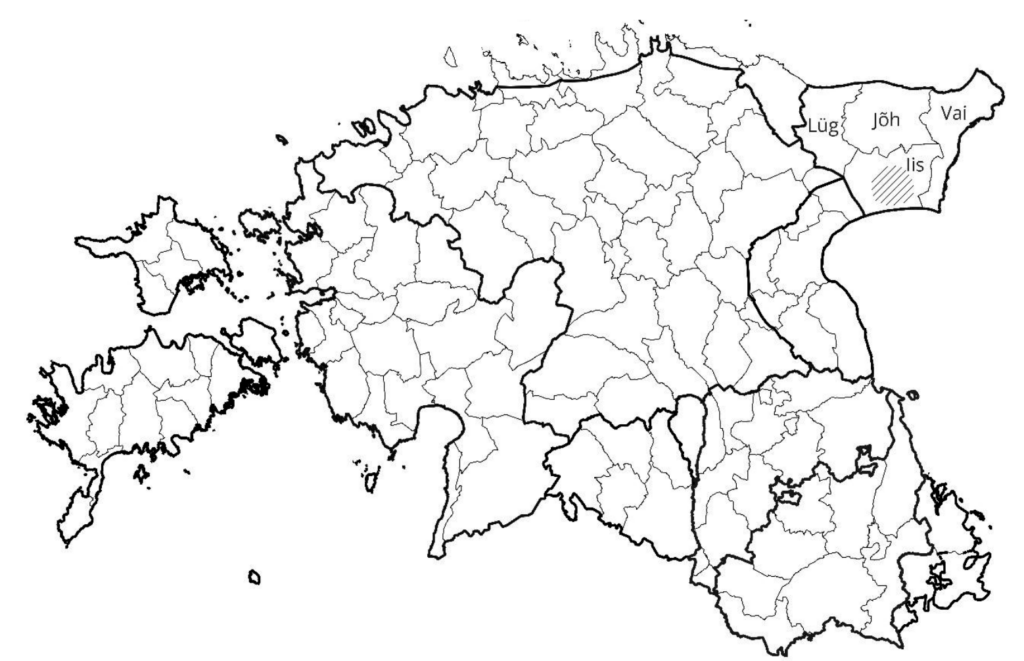
Source: Kehayov and Pajusalu 2026, Linguistica Uralica.
A multilingual community on the northern shore of Lake Peipus
Poluverniki was the name given to Lutherans who lived on and near the northern shore of Lake Peipus in the parish of Iisaku and who, in recent centuries, spoke distinctive Russian and Estonian dialects. The name ‘half-believers’ reflects the fact that the community preserved Orthodox customs after converting to Lutheranism. The villages of Vaikla and Liivaküla, about five kilometres from Iisaku, were regarded as the heart of the community, and Vaikla was even dubbed ‘the capital of the Poluverniki’.
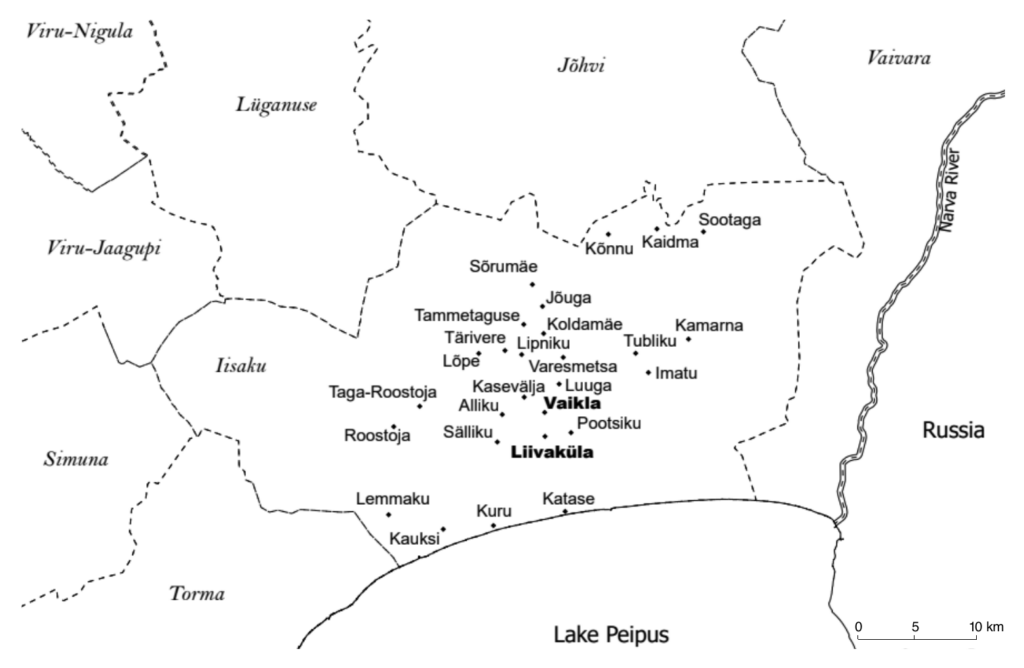
Source: Kehayov and Pajusalu 2026, Linguistica Uralica.
By the 1930s, the area they inhabited had shrunk to a handful of villages, which the Estonian press called the ‘Poluvernik republic’. The community nevertheless remained bilingual until the last decade of the 20th century. Today, the heritage of the Poluverniki is preserved above all by the Iisaku Museum.
Russian points to the northeast
The Russian spoken by the Poluverniki did not fully match that of their closest neighbours either, the Russian dialects of the northern shore of Lake Peipus and the Gdov area. Older speakers often pronounced a clear o in unstressed syllables. At times, l was replaced by a sound like u, as in vouk instead of volk ‘wolf’. The closest parallels to these features are found in the Northern Russian dialects of the Novgorod and Lake Ladoga regions, hundreds of kilometres to the northeast.
The authors offer two possible explanations. Speakers of Northern Russian dialects may have arrived in the area later. It is also possible that Slavic settlers arrived in the early Middle Ages and that their speech preserved old Northern Russian features. According to the researchers, the two explanations are compatible.
In Kehayov and Pajusalu’s view, archaeological investigations of old burial sites around Iisaku, combined with DNA analysis, could shed more light on the ancestry of the Poluverniki.
Science news story by Airi Kaunissaare.
Listen to the Vikerraadio report (in Estonian)
Loe teadusartiklit „Where did the language of the northeastern Estonian Poluverniki come from?“ (Petar Kehayov ja Karl Pajusalu, Linguistica Uralica, 2026, 62(2), 155–179)
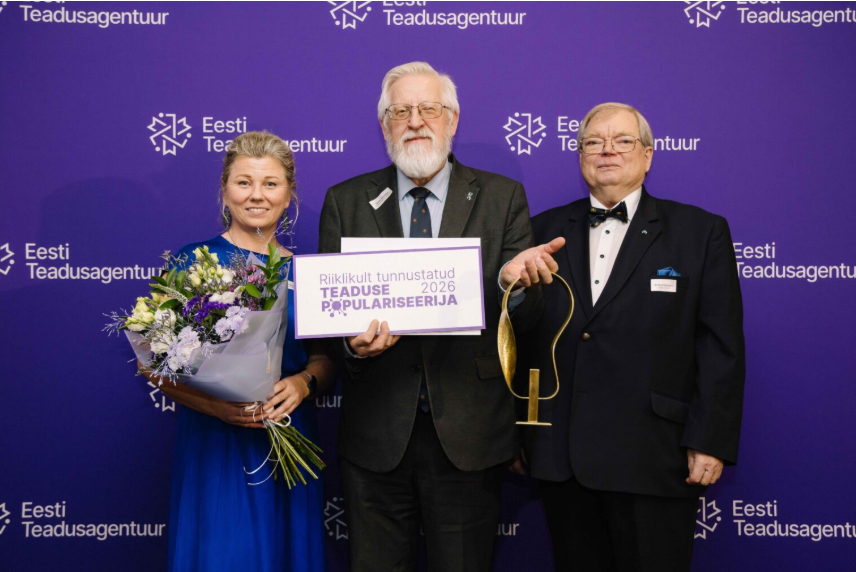
Photo: Marleen Kovalik
Academician Tarmo Soomere received the Tiiu Sild Lifetime Achievement Award in Tartu on 11 November in recognition of his longstanding and sustained work to popularise science and technology. The awards were presented at the science communication conference “Usaldab, ei usalda?” (“Trust or distrust?”). The national science communication awards are organised by the Estonian Academy of Sciences and the Estonian Research Council.
A marine scientist and mathematician, Tarmo Soomere has spent decades raising the profile of science and building public trust in it in Estonia. He launched the “Science in 3 Minutes” competition for early-career researchers and the “A Scientist’s Perspective” opinion column in Postimees. He served as President of the Estonian Academy of Sciences from 2014 to 2024. Academician Andres Metspalu, chair of the jury, said, “Tarmo Soomere has a remarkable ability to turn complex research findings into clear messages that resonate with people.”
More than 50 research papers authored or co-authored by Tarmo Soomere have appeared in journals published by Estonian Academy Publishers. He has also contributed to the editorial work of several of our journals. He currently serves as an editor of the Proceedings of the Estonian Academy of Sciences and the Estonian Journal of Earth Sciences.
We congratulate Academician Tarmo Soomere on this award and thank him for his longstanding contribution to the development of our journals.
Read more in the announcement from the Estonian Academy of Sciences (in Estonian).
Since 2021, the Year Book of the Estonian Mother Tongue Society, affectionately known among linguists as ESA, has been edited by Reili Argus, Professor of Estonian at Tallinn University. In the next interview in Estonian Academy Publishers’ series with editors-in-chief, we talk about what the speech of two-year-olds has taught a linguist, why the Estonian Mother Tongue Society, which is more than a century old, continues to publish its Year Book in Estonian, and how artificial intelligence has begun to influence language.
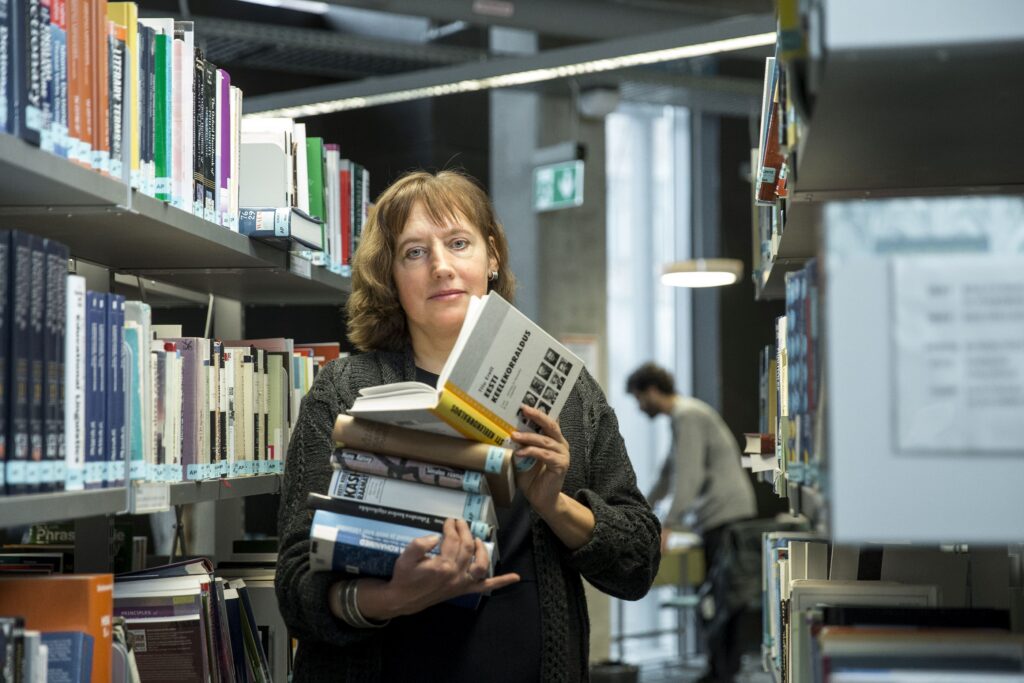
Photo: Tiina Kõrtsini
In 2021, you took over the Year Book from Professor Mati Erelt, who had edited it for more than 20 years. How did that come about?
Mati Erelt decided at some point that it was time for him to retire. When he was looking for a successor, the matter was discussed by the board of the Estonian Mother Tongue Society, and I was offered the role. It was as simple as that. I had not been on the editorial board before, but I was on the society’s board and therefore knew what was going on.
What did you take with you from Mati Erelt?
Certainly the way he encouraged young writers. Even when the reviewers were quite harsh, if he saw that an article had scientific value, something new that was worth working on, he would always encourage the author to keep working, give them a little extra time, support them himself, and tell them what the reviewers perhaps had not been able to put into words. I have tried to continue that kind of personal care and communication.
I have also tried to be reasonable when reviewers are too superficial in style or overly critical without cause. Sometimes two reviews contradict each other quite sharply. If you read the more negative one and realise that it is not neutral but coloured by the reviewer’s personal experience or worldview, something unrelated to the paper itself, you simply ask for a third. So far, my instinct has not let me down: in most cases, the first and third reviews have turned out to be more alike.
As Mati Erelt used to put it so well, you also have to use your own head. An editor can see whether criticism is justified or not. Sometimes there is no need even to send a manuscript out for review if you can see that its quality is such that nothing will come of it. The editor is a kind of filter.
How has the Year Book changed during your time?
I don’t think it has changed very much, and that is exactly what our readers expect. We usually present ESA in Tartu on 27 June, Veski Day, named after the linguist Johannes Voldemar Veski. There is a freshly printed issue on the table, and the editor-in-chief gives a short overview of what can be read this time. At least the first few times, a contented murmur rose from the audience when it was said that ESA was still more or less the same. It was as if people had feared that a new editor-in-chief would come along and change everything, and that is not what readers want.
Some things are different, though. We have regular authors, for example those working on etymology, who write a kind of serial, with the next instalment appearing in every issue. Alongside them, there used to be very little experimental linguistics or other more modern approaches, and very little writing on language teaching.
I have now been trying to make sure that every issue has at least one article related to language teaching. To that end, I go to conferences, and if a talk seems likely to lead to something interesting, I approach the author personally and encourage them to submit an article.
Two thirds of each issue consists of research articles and one third of review articles. Review articles are surprisingly important. As a complete beginner in editing, I regarded them as something of a nuisance: they could not go through the usual review process, their structure was different, and I had the feeling that nobody really read them anyway. It has since turned out that they are widely read. They matter to the Estonian Mother Tongue Society because they document its activities: there is one place where what the society did in the previous year is always on record. Since the last issue, we have also started publishing the decisions of the society’s Language Committee.
Who publishes in the Year Book? Are new young authors coming through?
Roughly a third are more experienced authors who write often. Another third are linguists in the prime of their careers. Their contributions vary, because the Estonian linguistics scene is tiny: the same people write for every publication, and the line-up of a single issue often depends on how deadlines fall and what someone happens to have ready. The final third are young researchers, that is, doctoral students. There are quite a lot of them, and fortunately they keep coming, with exciting topics.
The society has more than a century of history, and the Year Book has been published since 1955. How is the Year Book different today from half a century ago?
Half a century ago the topics were different. There were certainly more topics related to dialect research, and inevitably there are fewer of them now. Today, there are considerably more corpus studies and, to some extent, also experiment-based studies.
So language research has, in a sense, become more practical.
Yes, and in my view that is also something of a concern. Recently, I have seen few papers that are theory-based or closely tied to theory. If I could dream about what the articles in the next issue might be, there would be a couple that deal with genuine linguistic theory: placing their material within models developed by the great theorists, saying whether the model describes that material or not, and proposing models of their own. We now have access to large bodies of text, or corpora, and we can work with them, but we should also say something theoretical about the data we have obtained.
What sets the Year Book of the Estonian Mother Tongue Society apart from other linguistics journals?
If you compare them one by one, Keel ja Kirjandus (Language and Literature) covers both language and literature, and it has developed its own range of topics: little applied research, more historical linguistics, grammar, and semantics. Estonian Papers in Applied Linguistics is devoted purely to applied linguistics, with hardly any more theoretical writing. Language teaching, however, has somehow fallen between the various publications, and we are trying to bring it into the Year Book of the Estonian Mother Tongue Society. Onomastics, too, has traditionally tended to find its home in our Year Book, because the society has generally done a great deal of work in that field. We are perhaps the most central, the most traditional publication of Estonian language research, and I don’t mean that in a bad way. That kind of stability and reliability is a great strength of ESA.
The Year Book is published in Estonian and Finnish. Why not in English?
Because there is already a vast amount of linguistics literature in English. And in my opinion, in the age of artificial intelligence, it is rather pointless to worry that something is in Estonian and an English-speaking reader cannot access it. Out of curiosity, I tried searching for a topic in my own field one morning. There are AI-based platforms where you ask a question and a so-called agent produces a literature review for you. I asked a question (in English) about first and second language acquisition and waited with interest to see what would come up about Estonian. It had used, let’s say, 90 per cent of the relevant Estonian-language articles and summarised them entirely accurately.
But it is important to publish in Estonian, because if we do not work on the terminology ourselves, nobody else will. If we let all of linguistics switch to English, then at some point we will no longer be able to talk about Estonian at all, because we will not have the words. We have tried to keep Finnish because there are still linguists in Finland who learned Estonian at university and could write for and read ESA.
Who reads the Year Book?
Mostly our own linguists, but also language editors and teachers.
In my view, teachers are a community we should reach more strongly. When training teachers at the university, we constantly try to instil in them that studying to become a teacher does not mean you learn it all and are then done. You have to keep learning, and you need certain professional journals that you read throughout your life. This is very difficult, because people’s ability to read academic texts is getting steadily worse. Long texts are feared, academic texts are feared: science seems so frightening that it cannot possibly be understood. Some certainly do read, and there are teachers who have surprised me at in-service training courses by saying that they read it. But certainly not as many as we would like.
Language is closely linked to artificial intelligence. How is AI affecting language?
It is very hard to say, because there is no research on this here yet. If we pose the question at all, we have to think about which language it affects: the language we speak or the language we write. There is certainly some effect, but I doubt whether we are able to recognise it. Spoken language, fortunately, is still spoken language and perhaps more natural. What you do see in AI-generated texts is a great deal of officialese, which AI can neither recognise nor avoid. Our texts probably really are full of officialese, with käesolev (‘the present’), antud (‘the given’), läbiviimine (‘carrying out’), and teostamine (‘implementation’) piled one on top of another. I suppose that is just what our language is like: AI simply has a lot of that kind of text to draw on, and it produces more of it itself.
That is quite an interesting research question.
But terribly difficult to study, because in the end we would be studying what AI itself has produced. At the same time, AI certainly speeds up certain research processes.
AI is also good at things that make an editor’s work easier. Say an abstract is 21 words too long, and you sit in front of the text and cannot think of a single way to make it shorter. AI offers three versions you would not have come up with yourself, and one of the three is usually good enough. So, it sometimes helps you out of a mental block when you have got stuck on your own sentence.
On the other hand, the editor’s responsibility grows. I have wondered whether I can recognise a text produced by AI. In student papers I often can, because when there are made-up sources, which we call ‘hallucinations’, it is immediately clear that the author did not write it themselves. But with a well-made AI text, I am not sure I would recognise it straight away. We need to think about where AI-generated text may appear in research and where it may not. Where there is the researcher’s own analysis, you would want to see text written by a real person.
How did you come to linguistics in the first place?
With many career choices, it is a combination of chance and certain preconditions. One precondition was perhaps that I went to Tartu to study Estonian philology. I had also considered the Faculty of Medicine, but my circumstances at the time meant I could not go there, as it did not offer distance learning. The element of chance was perhaps that in my third year, I ended up in the child language research group led by the Finnish researchers Kirsi and Jorma Toivainen. Of course, that was not entirely a coincidence either, since I had a child at the time, and the research material was, so to speak, available at home.
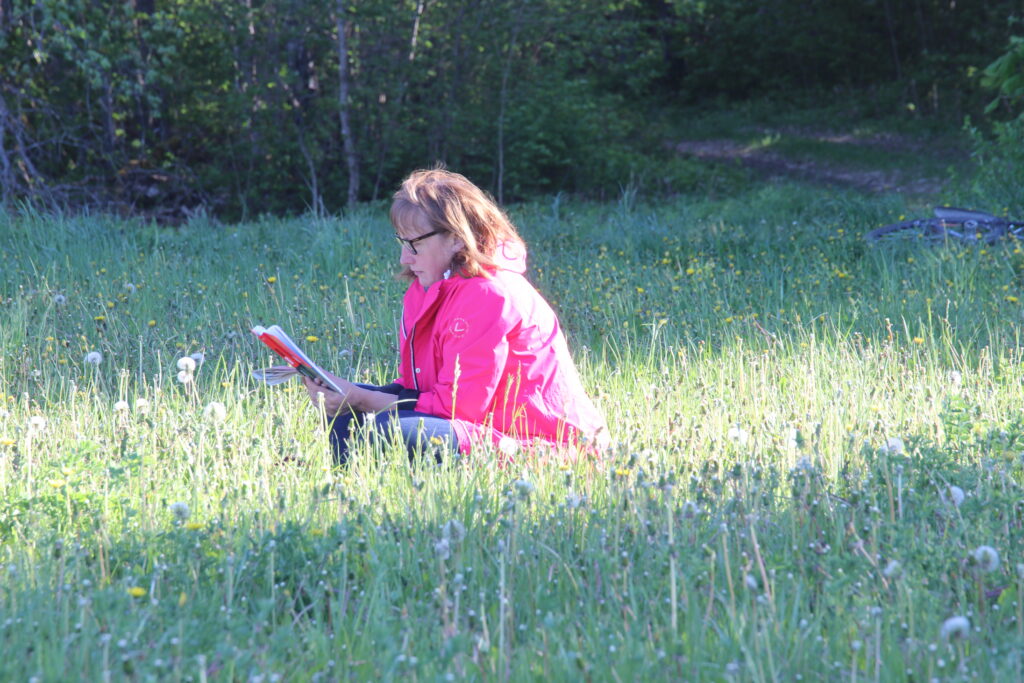
Photo: Tõnis Argus
What have children taught you about Estonian?
I probably would not be in linguistics if it had not been for child language research.
Especially with small children, it is as if at a certain point a window opens and you can see how language works, how language is made. A moment later the window closes, everything is more or less acquired, and the child no longer shows you anything. But it is precisely during the period when mistakes and irregularities start to appear, when a child begins to inflect words such as munat and sabat instead of muna (‘egg’) and saba (‘tail’), or onuseid and tädiseid instead of onusid (‘uncles’) and tädisid (‘aunts’), that you see what lies behind it and how the child is building the language.
At first, a child learns words that have no ending in the partitive case, such as maja (‘house’) and kala (‘fish’). Then, suddenly the first partitive form autot (‘car’) appears, the child realises that the form ends with t, and starts adding that t to the end of every noun: munat, sabat. Or you see how a child performs a kind of back-formation and says see on onu nais (‘this is uncle’s wife’, where the correct form would be naine). You realise that the child has worked out that the genitive usually ends in a vowel and the nominative in a consonant, and so derives the form backwards from the genitive naise: the nominative must therefore be nais. It is such fun to observe things like this in the speech of two-year-olds. But at some point, the system falls into place, the child, so to speak, closes the door, and you can no longer see in.
The Year Book has now been published for 70 years. Where will it be in 50 years’ time?
I think the journal will still exist in 50 years. I hope so with all my heart. Nothing very significant has really happened over the past 50 years: the topics have changed a little and become more contemporary, but the essence is much the same.
I don’t really believe it will still appear in print, though. That is probably a question for the next ten years. At present, we print a small run purely out of nostalgia, and because there are readers who want to have it on their shelves. But the print run keeps getting smaller, we no longer keep copies in stock, and perhaps in ten years those who still want print today will have given it up too. It will probably move entirely online, but we have no idea what form journals will even take in 50 years.
A hundred years ago the focus was on dialect research. What could the topics of the coming decades be?
I think the topics will change, because it is already clear that there are so many datasets obtained with large language models that they will shape the topics too. Topics related to the use of several languages will certainly come more to the fore in linguistics. Unfortunately, we have little research of that kind so far.
There could also be more sociolinguistic topics. If I take just my own field, children in Estonian schools speak more than 150 different languages between them. As far as I know, Estonian linguistics has only studied children whose mother tongue is Russian, and, more recently, Ukrainian children to some extent. In one project, we saw that in a class of 24 children, nine might have a different mother tongue, and those languages included, for example, Yoruba, Bulgarian, and Dutch – very unusual combinations, but they exist. We will probably have to deal with this, but at the moment, it seems that we do not know how, and we would rather turn a blind eye.
So, there is no shortage of research topics. What would you advise those considering writing for the Year Book?
First, ESA is a category 1.1 journal, which cannot be overlooked. Second, it is an old and well-established journal. Third, our editorial process is fairly short. With some international journals, it can take up to two years from submission to publication. With us, it never takes more than six months. The submission deadline is usually around 10 January, and by the end of June, the issue has been published.
The quality of the reviewers may also be important. We no longer use reviewers who simply tick boxes in a table and are too superficial. We have built up a pool of reviewers who do thorough work, and from whom we expect substantive comments in addition to the ticks.
Interview by Airi Kaunissaare
The Year Book of the Estonian Mother Tongue Society
- The Estonian Mother Tongue Society (originally the Academic Mother Tongue Society) was founded in 1920 at the University of Tartu on the initiative of Finnish linguist Professor Lauri Kettunen, modelled on Finland’s Kotikielen Seura, to ‘promote interest in knowing, developing, and researching the Estonian language’. The founding meeting was held in a lecture hall in the university’s main building (now the cloakroom).
- The society’s first yearbooks (1921–1926) were simply annual activity reports. A scholarly year book was discussed in 1946, when the society was placed under the Academy of Sciences, but permission came only in 1954, and the first volume appeared in 1955. Its editorial board was chaired by Academician Paul Ariste until 1990.
- Articles are published in Estonian and Finnish, each with a summary in the other language.
- Every article is assessed by two anonymous reviewers.
- Indexed in the Web of Science Emerging Sources Citation Index, Scopus, ERIH PLUS, and the MLA International Bibliography.
- Open access under a CC BY licence, ETIS category 1.1.
- Published by Estonian Academy Publishers.
- From 1999 to 2021, the Year Book was edited by grammarian Professor Mati Erelt (1941–2024), long-time chair of the Estonian Mother Tongue Society.
Who is Reili Argus?
Reili Argus studied Estonian philology at the University of Tartu and in 2008 defended her doctoral thesis at Tallinn University on the acquisition of Estonian inflectional morphology. She is Professor of Estonian at Tallinn University and researches how children acquire Estonian both as a first and as a second language. She is a member of the board of the Estonian Mother Tongue Society and has been editor-in-chief of the Year Book of the Estonian Mother Tongue Society since 2021.
Researchers at the Estonian University of Life Sciences have shown that the levels of valuable compounds in grape pomace depend on both the grape variety and the winemaking method. Published in Proceedings of the Estonian Academy of Sciences, the study helps assess how this winemaking by-product could be used as a raw material for new products.
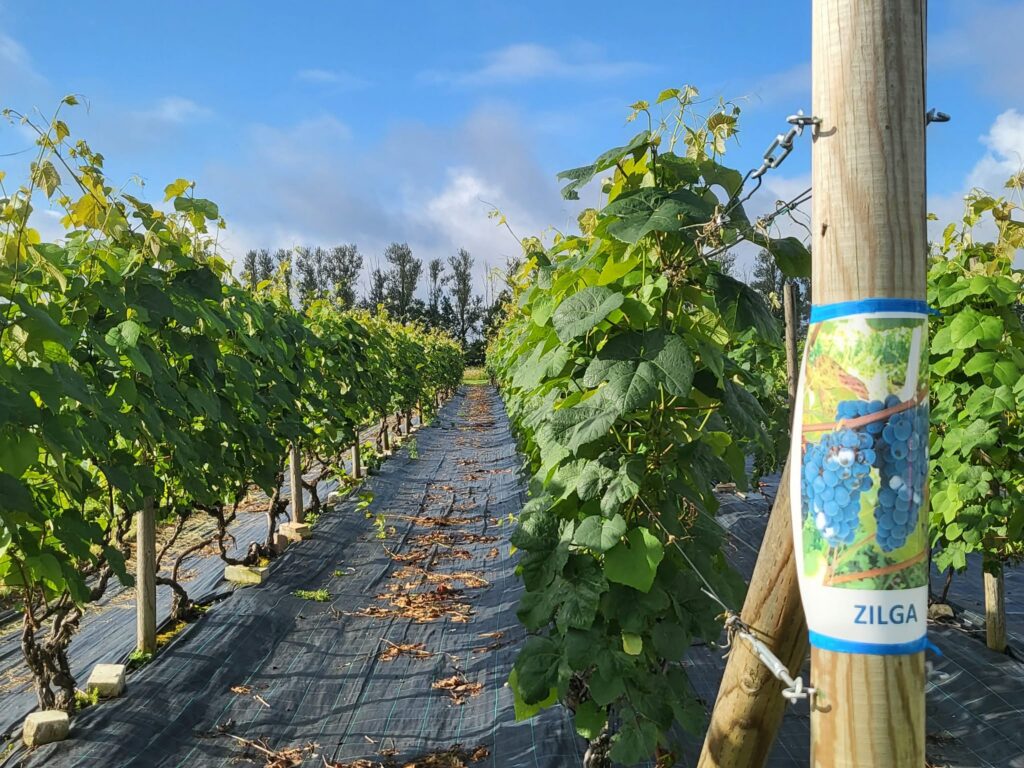
Photo: Kadri Karp
Pomace consists of the skins, seeds and pulp left after grapes are pressed, sometimes including stems. Depending on the winemaking method, it accounts for 15–30 per cent of the mass of processed grapes and retains valuable bioactive compounds.
The study’s authors, Kersti Seeme, Kadri Karp, Ulvi Moor and Reelika Rätsep, compared two dark-skinned grape varieties, ‘Hasansky Sladky’ and ‘Zilga’, grown at the university’s Rõhu experimental station. They used five winemaking methods and then measured the polyphenol, anthocyanin and tannin content of the resulting pomace.
The findings showed that winemaking techniques affect different groups of compounds in different ways. For example, pomace from white wine made with ‘Zilga’ contained more than twice as much anthocyanin pigment as pomace from conventional red wine made with the same variety. Longer contact between the juice and skins allows more of these red pigments to pass into the wine, leaving less in the pomace. Adding extra pomace during the fermentation of ‘Zilga’ red wine, however, increased the polyphenol and tannin content of the resulting pomace.
According to the study’s lead author, Kersti Seeme, a junior researcher in food science at the Estonian University of Life Sciences, this variation presents a key challenge for making further use of grape pomace. Its chemical composition depends substantially on the grape variety and winemaking technology, so pomace from different producers may not be suitable for the same products.
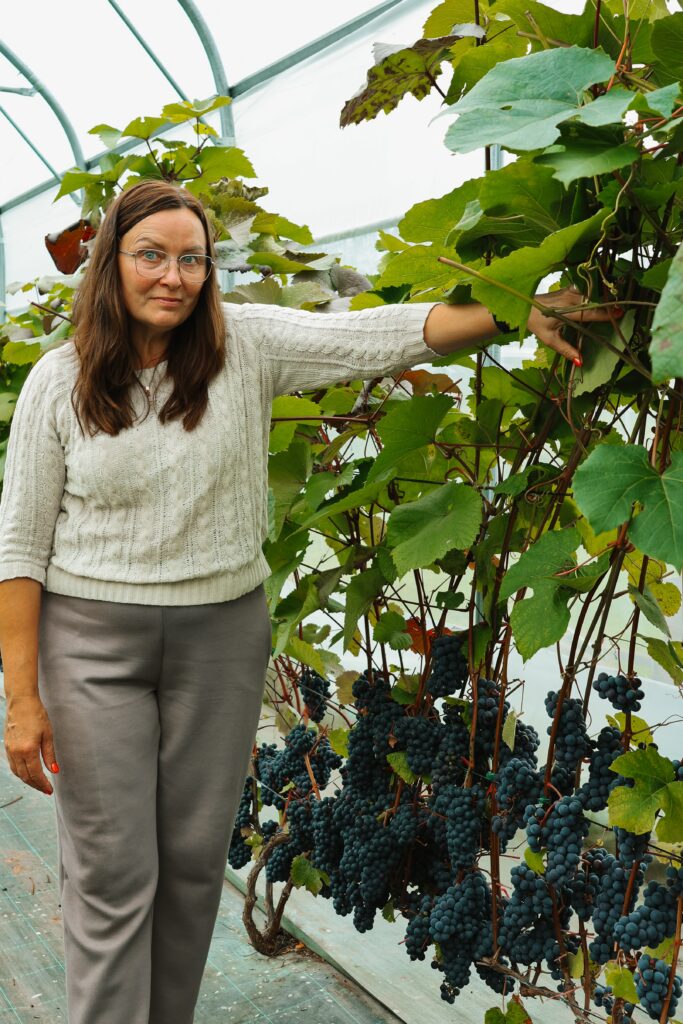
Photo: Marian Seeme
In Estonia, grape pomace is already used to mature Pecorello Brillo sheep’s milk cheese at Viinamärdi farm in Tartu County. It is also used to produce spirits. Choosing a suitable application requires an understanding of the pomace’s composition. As it spoils quickly, its further use or preservation should be planned during winemaking.
Text by Airi Kaunissaare
The study, “Phenolic composition of grape pomace from ‘Hasansky Sladky’ and ‘Zilga’ as affected by winemaking technology”, appears in issue 4 of the 2026 volume of Proceedings of the Estonian Academy of Sciences (75(4), 302–306).
Read the research article in Proceedings of the Estonian Academy of Sciences.
The study was also featured on Novaator, the science news portal of Estonian Public Broadcasting (ERR) (in Estonian).
The Estonian Journal of Archaeology has renewed its Editorial Board, with the new composition taking effect on 13 October 2026. The Editorial Board brings together archaeologists from universities in Estonia, Finland, Lithuania, Denmark and Germany, combining the experience of continuing members with the expertise and perspectives of six new colleagues.
Led by Editor-in-Chief Valter Lang, the renewed Editorial Board serves as an advisory body, contributing to the journal’s scholarly development and international visibility. Its members support the Editor-in-Chief by providing expert advice, assisting in the identification of suitable peer reviewers and helping to attract high-quality research submissions.
Meet the new Editorial Board members
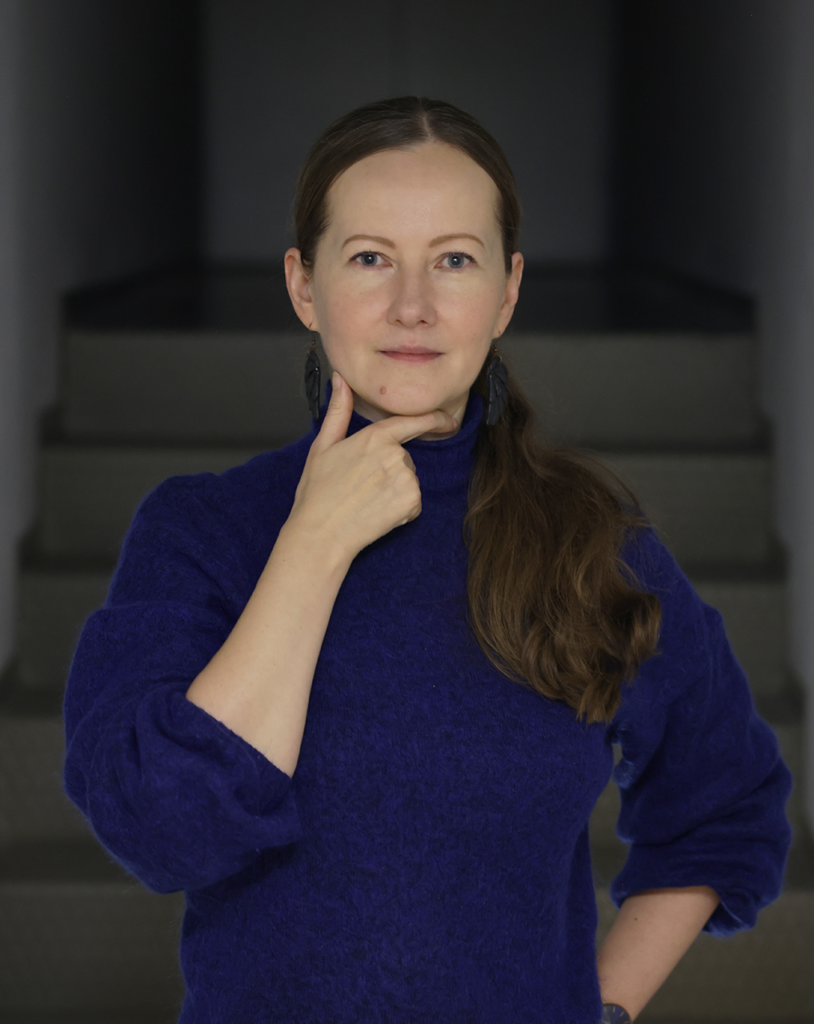
Photo: Private collection
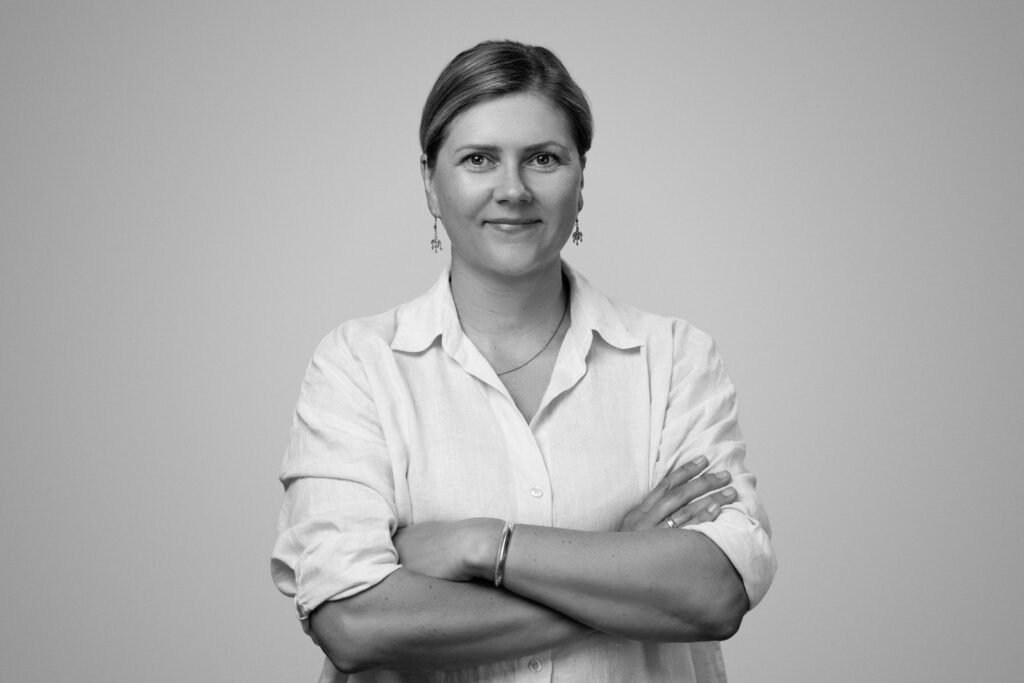
Photo: Joana Suslavičiūte
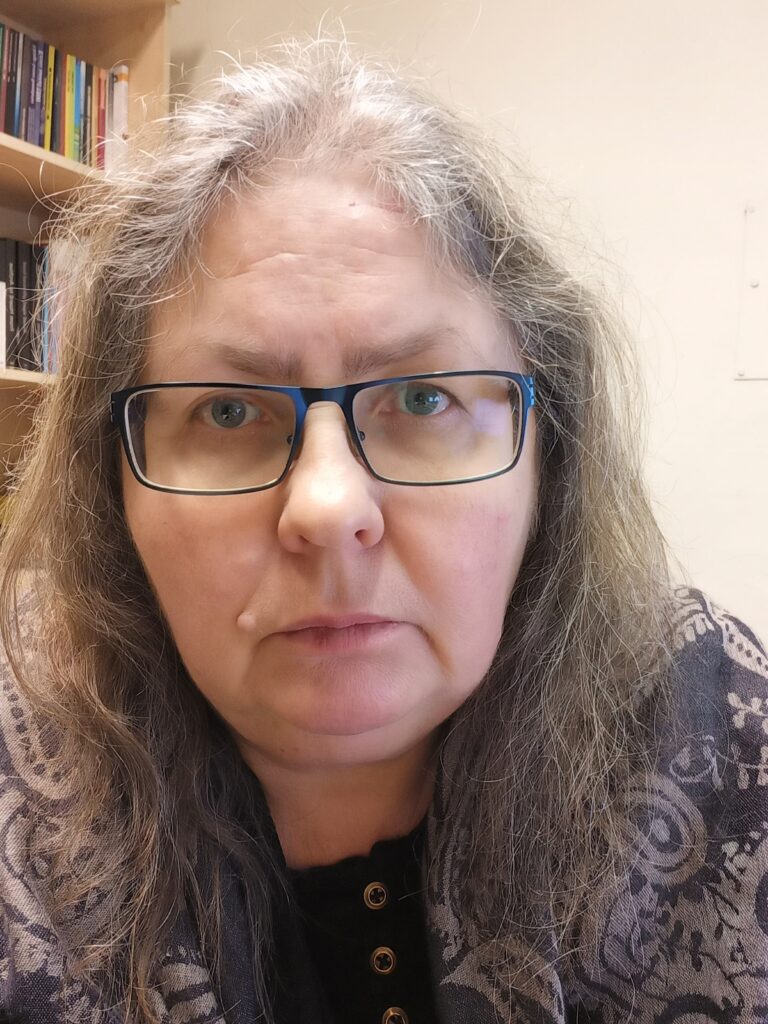
Photo: Private collection
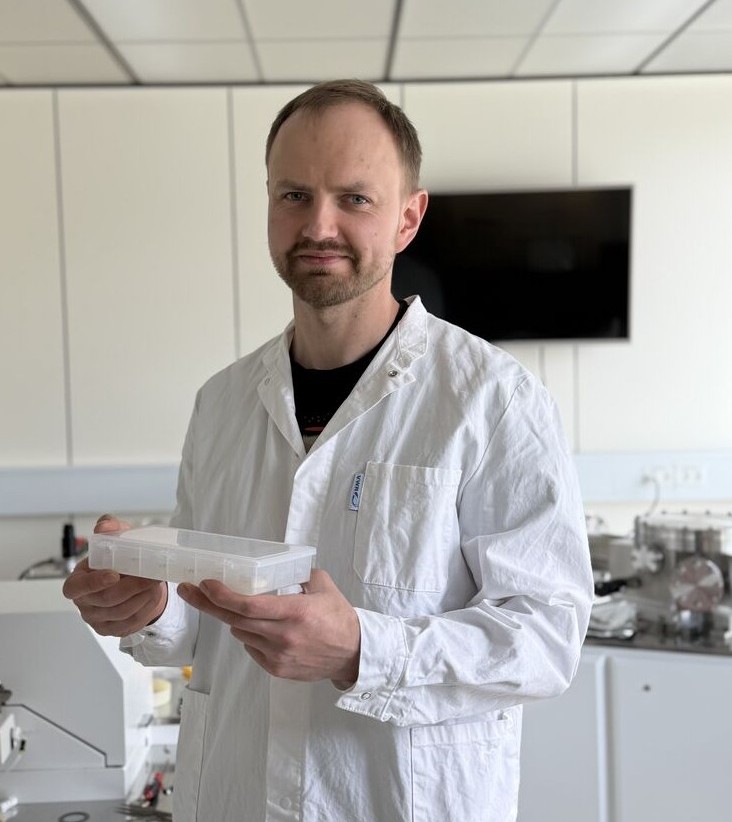
Photo: Cathrine Villaume
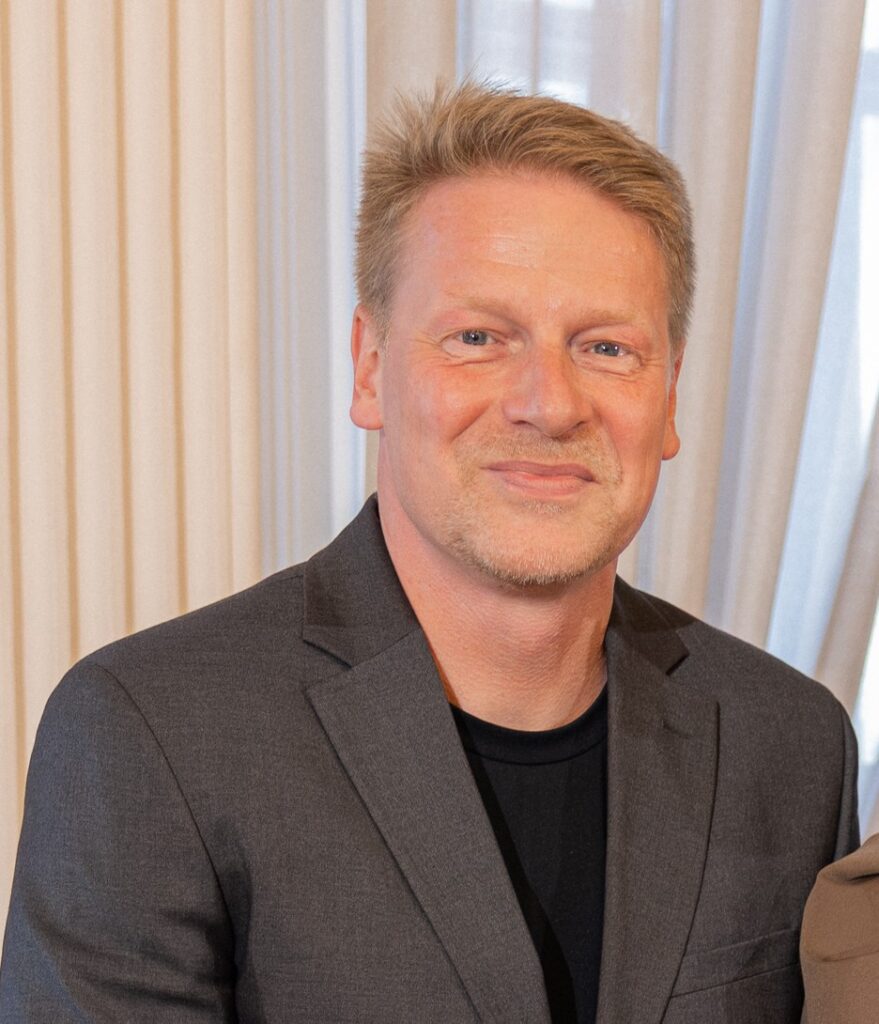
Photo: Reti Kokk
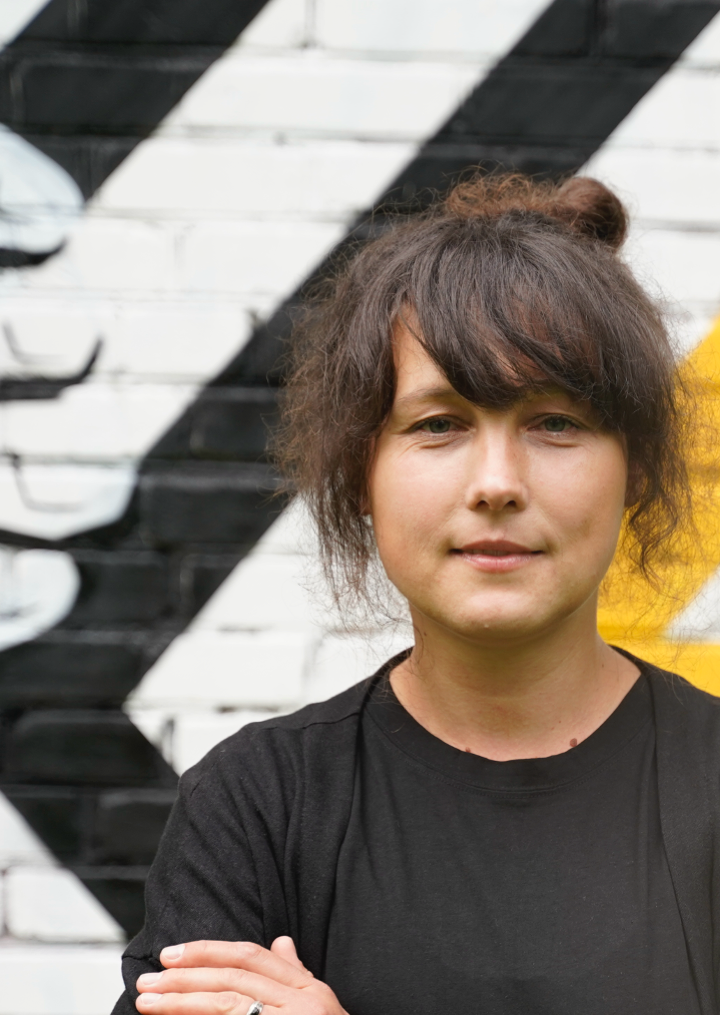
Photo: Karin Pai
Three members of the previous Editorial Board continue to serve: Aivar Kriiska (University of Tartu), Lembi Lõugas (Tallinn University) and Erki Russow (Tallinn University).
With thanks to the outgoing members
Estonian Academy Publishers and Editor-in-Chief Valter Lang extend their sincere gratitude to the six outgoing Editorial Board members: Marika Mägi, Algimantas Merkevičius, Jüri Peets, Jussi-Pekka Taavitsainen, Heiki Valk and Andrejs Vasks.
We warmly thank them for their expertise, dedication and valuable contributions to the development of the Estonian Journal of Archaeology, and wish them continued success in their academic endeavours.
The Board of the Estonian Academy of Sciences approved the updated composition of the Editorial Board of the Yearbook of the Estonian Mother Tongue Society (ESA) on 13 October 2026. Three new members joined the board: Geda Paulsen, Kristiina Praakli and Ann Veismann.
The renewed Editorial Board brings together linguists from different generations and research fields, helping to maintain the yearbook’s high academic standards and international visibility.
Geda Paulsen is an Associate Professor at Department of Modern Languages; Finno-Ugric Languages at Uppsala University and Senior Research Fellow at the Institute of the Estonian Language. Kristiina Praakli is Associate Professor of Applied Linguistics at the University of Tartu, while Ann Veismann is Associate Professor of General Linguistics at the University of Tartu.
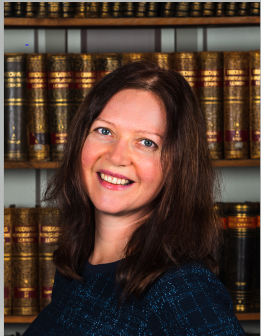
Photo: Annika Lepp / Institute of the Estonian Language photo archive
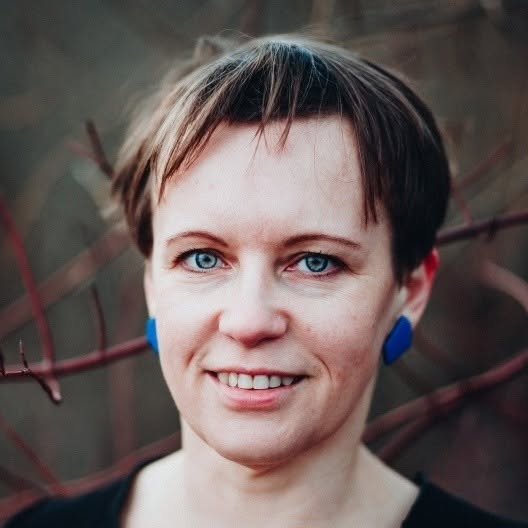
Photo: Ruudu Rahumaru
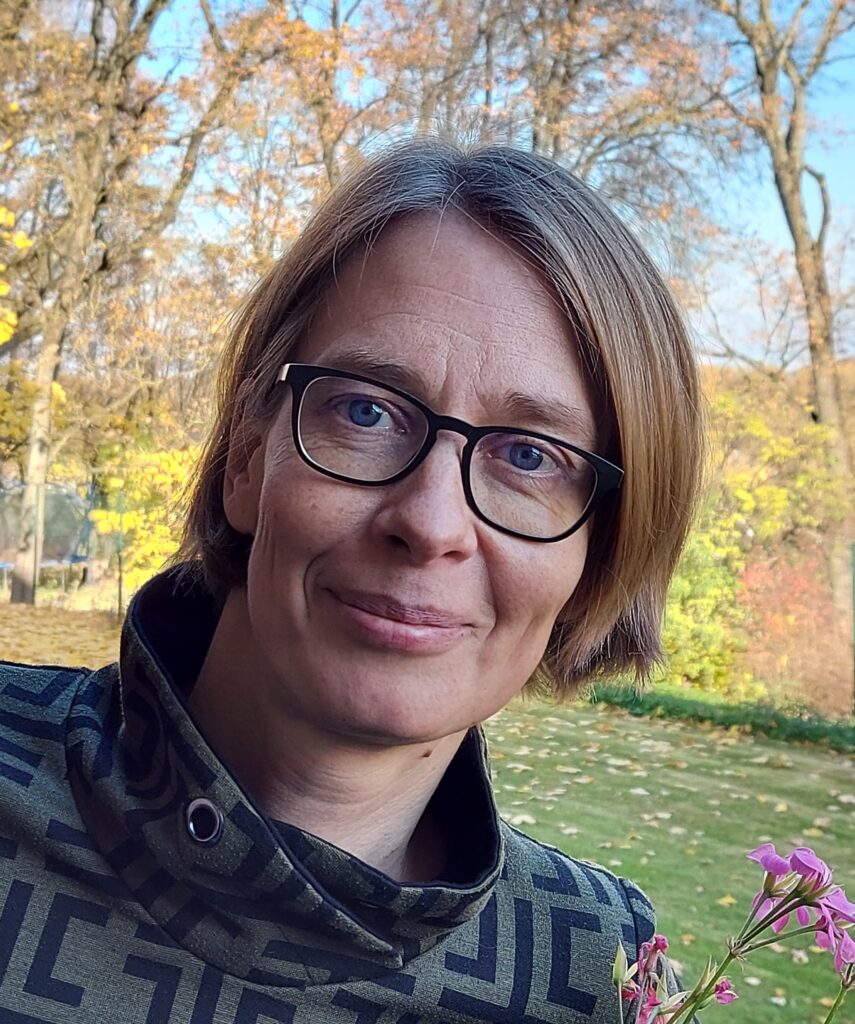
Photo: Ruuben Sonn
The following members will continue to serve on the Editorial Board: Riho Grünthal, Helle Metslang, Karl Pajusalu, Raimo Raag, Kristiina Ross and Lembit Vaba.
We thank the outgoing members, Cornelius Hasselblatt, Tuomas Huumo, Urmas Sutrop, Jüri Viikberg and Eberhard Winkler, for their contributions to the publication of the yearbook and the advancement of Estonian linguistics.
The Yearbook of the Estonian Mother Tongue Society is an annual, peer-reviewed, open-access scholarly publication featuring linguistic research articles in Estonian and Finnish, accompanied by English-language abstracts. The yearbook is published by Estonian Academy Publishers.
A study by Danish scientist Hans Henrik Bruun, published in the journal Proceedings of the Estonian Academy of Sciences, reports plant-feeding gall midges (Cecidomyiidae: Cecidomyiinae) from Estonia for the first time. During a week-long field trip, he recorded 45 species new to the country.
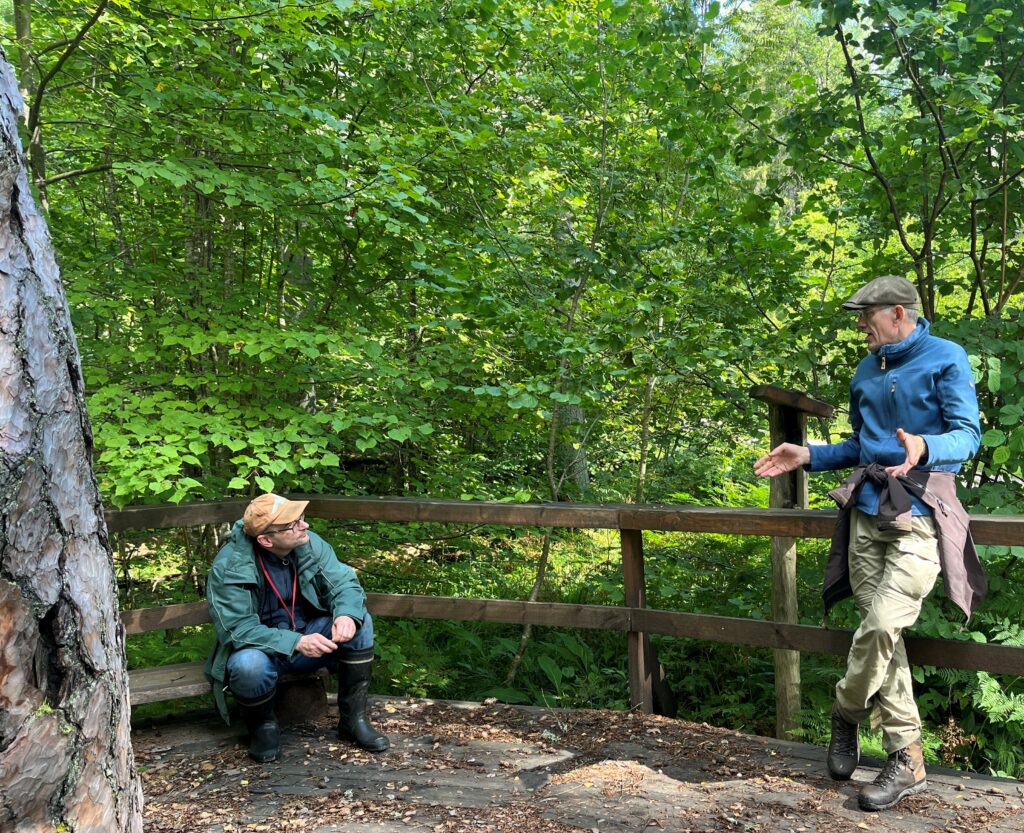
Photo: Kadri Runnel
The study’s author, Hans Henrik Bruun, is a professor in the Department of Biology at the University of Copenhagen, whose main research areas are community ecology, biodiversity, and conservation biology. Gall midges are one of his long-standing side interests: over the years, he has published a series of papers on new species records in his native Denmark and in other European countries such as Finland, Austria, Germany, and Spain, steadily adding species to those countries’ known checklists. The new study follows the same pattern, now extending it to Estonia.
Bruun came to Estonia at the invitation of Kadri Runnel and Asko Lõhmus from the University of Tartu. He visited 18 sites across Estonia from 18 to 24 August 2025, surveying alvar grasslands, wooded meadows, salt marshes, floodplain wetlands, swamp forests, and urban areas, from Lääne-Nigula to Saaremaa and Muhu, and from Soomaa and Tartu to Põlva and Rae. Before his study, 152 gall midge species were known from Estonia, a number reached thanks to the Estonian Malaise Trap Project. All of them, however, belonged to subfamilies other than Cecidomyiinae. The mainly plant-feeding subfamily Cecidomyiinae had never been investigated in Estonia, and not a single species had been recorded from the country.
Bruun’s own fieldwork yielded 45 species new to Estonia. By adding reliable records of further species from citizen science portals (iNaturalist and eElurikkus) and the GBIF database, he compiled a preliminary checklist of 70 species for Estonia, two of which were identified to genus level only. Eight of the species he recorded, among them Dasineura myosotidis, Geocrypta braueri, and Semudobia skuhravae, had not previously been known from any of the three neighbouring territories: Latvia, Finland, or Leningrad Province.
Who are gall midges?
Gall midges (Cecidomyiidae) are small flies (Diptera), usually only a few millimetres long, and belong to a species-rich family with diverse life histories and feeding niches. The adults are short-lived, usually surviving only a few days, and their main task is to reproduce. In plant-feeding species, the larvae live and develop inside a gall on the host plant: a deformed, often fleshy or woody growth that the larva induces through its feeding or through chemical substances. The gall provides the larva with both food and shelter from predators. Almost all plant-feeding species are narrowly specialised, tied to a single host plant and, in addition, to a single plant part (a bud, leaf, flower, stem, or similar), each producing a characteristic gall. As a result, species are often identified by the shape of the gall and the characteristics of the larva rather than by the appearance of the midge itself.
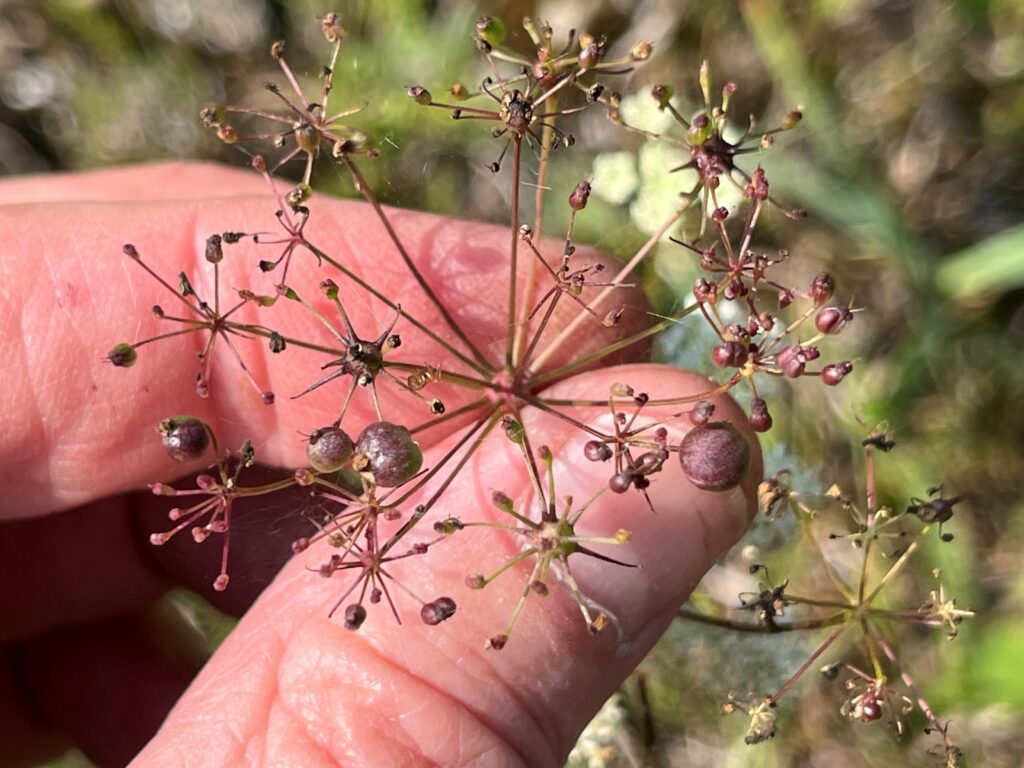
Photo: Hans Henrik Bruun
The family is also one of the world’s least studied insect groups. The global checklist currently lists 6,887 species in 816 genera, but this number has been estimated to represent less than one per cent of the family’s true species richness. The European fauna is considered relatively well known by continental standards, but the level of knowledge varies greatly between countries. For plant-feeding gall midges, Estonia was until now a complete blank spot.
According to Bruun, most gall midges have inconspicuous lifestyles and easily go undetected by untrained human observers. He points out that citizen science portals, where users’ observations documented with mobile phone photos can be identified, offer brand new opportunities for recording gall midges and other insect groups that are difficult to identify without specialist taxonomic knowledge. The 45 species found to be new to Estonia in just one week and the preliminary checklist of 70 species show how little is known about Estonia’s gall midge fauna. In Bruun’s words, the study is “but a first stab” at investigating it, and it calls for more intensive recording that combines traditional methods with modern DNA barcoding.
Text by Airi Kaunissaare
The study “A first stab at investigating the Estonian fauna of gall midges (Diptera: Cecidomyiidae: Cecidomyiinae)” appears in issue 4 of the 2026 volume of Proceedings of the Estonian Academy of Sciences (75(4), 280–284).
DOI: https://doi.org/10.3176/proc.2026.4.02
Read the article in Proceedings of the Estonian Academy of Sciences.
The study was also featured on Novaator, the science news portal of Estonian Public Broadcasting (ERR) (in Estonian).
On 13 October 2026, the Board of the Estonian Academy of Sciences appointed Professor Alar Konist of Tallinn University of Technology (TalTech) as the new Editor-in-Chief of the scientific journal Oil Shale, for a five-year term beginning on 22 October.
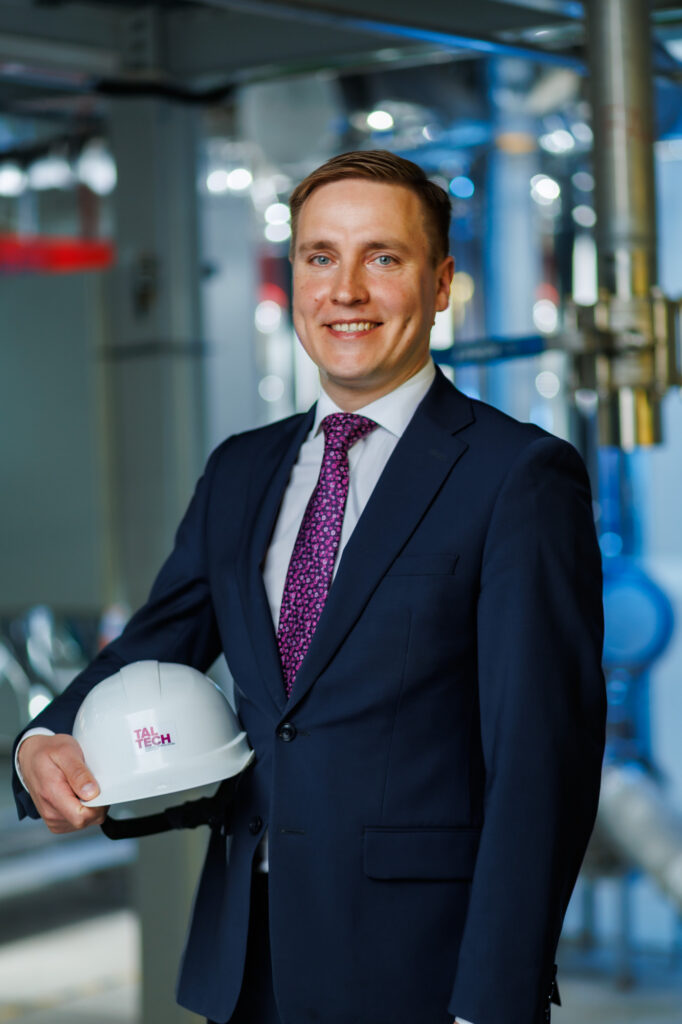
Alar Konist is Director of the Department of Energy Technology, Tenured Full Professor and Head of the Research Group of Sustainable Energy and Fuels at TalTech. His research focuses on areas including oil shale and biomass valorisation, carbon capture and utilisation technologies, and the development of sustainable energy systems.
Konist is well acquainted with Oil Shale, having served on its Editorial Board for several years. As the new Editor-in-Chief, he aims to increase the journal’s international visibility, attract more high-quality research papers, and streamline its editorial and publication processes.
“Alar Konist has an ambitious and well-considered vision for the journal’s development. Of particular importance is his commitment to raising its scientific standards and strengthening its editorial team,” said Marek Tamm, Vice-President of the Estonian Academy of Sciences and Chair of the Publishing Council.
The Estonian Academy Publishers extends its sincere gratitude to the outgoing Editor-in-Chief, Professor Andres Siirde, for his many years of dedicated work in developing Oil Shale. Professor Siirde has led the journal since 2019, having previously served as its Deputy Editor-in-Chief from 2008 to 2018.
We wish Professor Konist every success in his new role!

The Yearbook of the Estonian Mother Tongue Society (Emakeele Seltsi aastaraamat) has welcomed three new members to its Editorial Board, bringing additional expertise in linguistics and strengthening the journal’s academic network.
The new members are Geda Paulsen (Institute of the Estonian Language, Estonia; Uppsala University, Sweden), Kristiina Praakli (University of Tartu, Estonia) and Ann Veismann (University of Tartu, Estonia).
They join the existing Editorial Board, which brings together scholars from Estonia, Finland and Sweden.
The Editorial Board supports the Editor-in-Chief in maintaining the journal’s academic quality, identifying suitable reviewers, encouraging manuscript submissions and strengthening its visibility within the international linguistics community.
We warmly welcome the new members and look forward to their contributions to the continued development of the Yearbook of the Estonian Mother Tongue Society.

|

|