PUBLISHERS

akadeemia kirjastus
Researchers at the Estonian University of Life Sciences have shown that the levels of valuable compounds in grape pomace depend on both the grape variety and the winemaking method. Published in Proceedings of the Estonian Academy of Sciences, the study helps assess how this winemaking by-product could be used as a raw material for new products.
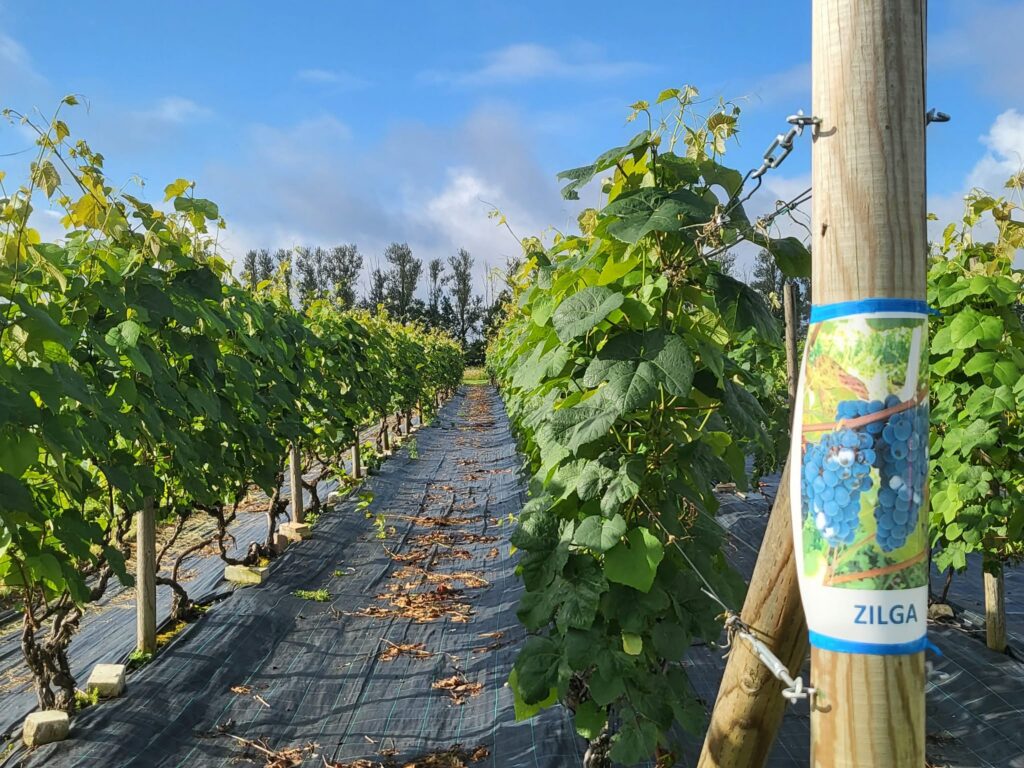
Photo: Kadri Karp
Pomace consists of the skins, seeds and pulp left after grapes are pressed, sometimes including stems. Depending on the winemaking method, it accounts for 15–30 per cent of the mass of processed grapes and retains valuable bioactive compounds.
The study’s authors, Kersti Seeme, Kadri Karp, Ulvi Moor and Reelika Rätsep, compared two dark-skinned grape varieties, ‘Hasansky Sladky’ and ‘Zilga’, grown at the university’s Rõhu experimental station. They used five winemaking methods and then measured the polyphenol, anthocyanin and tannin content of the resulting pomace.
The findings showed that winemaking techniques affect different groups of compounds in different ways. For example, pomace from white wine made with ‘Zilga’ contained more than twice as much anthocyanin pigment as pomace from conventional red wine made with the same variety. Longer contact between the juice and skins allows more of these red pigments to pass into the wine, leaving less in the pomace. Adding extra pomace during the fermentation of ‘Zilga’ red wine, however, increased the polyphenol and tannin content of the resulting pomace.
According to the study’s lead author, Kersti Seeme, a junior researcher in food science at the Estonian University of Life Sciences, this variation presents a key challenge for making further use of grape pomace. Its chemical composition depends substantially on the grape variety and winemaking technology, so pomace from different producers may not be suitable for the same products.
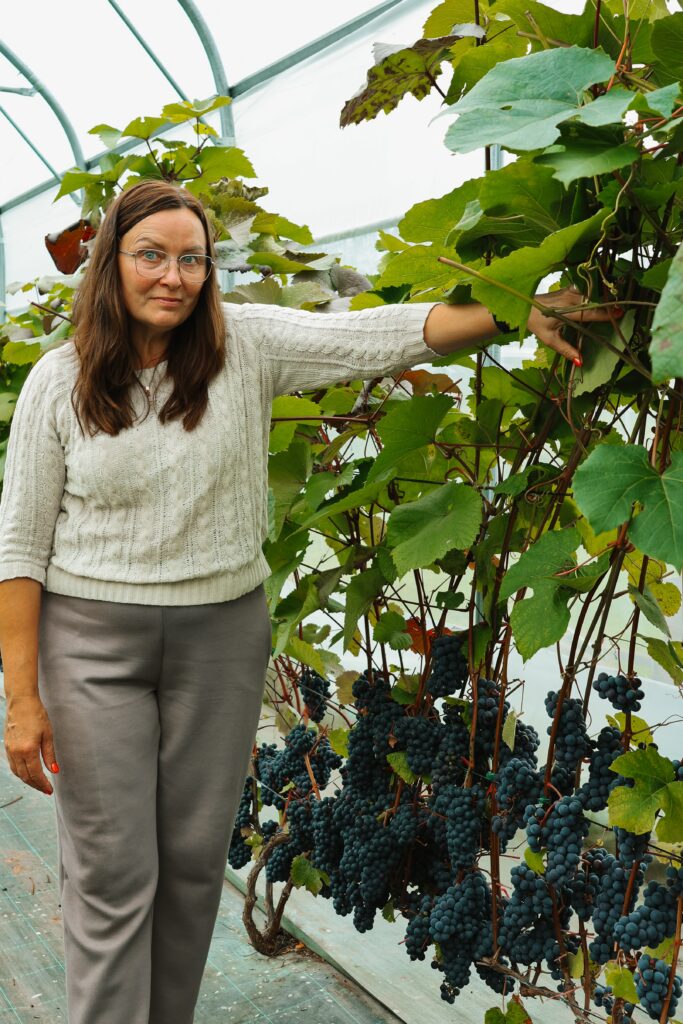
Photo: Marian Seeme
In Estonia, grape pomace is already used to mature Pecorello Brillo sheep’s milk cheese at Viinamärdi farm in Tartu County. It is also used to produce spirits. Choosing a suitable application requires an understanding of the pomace’s composition. As it spoils quickly, its further use or preservation should be planned during winemaking.
The study, “Phenolic composition of grape pomace from ‘Hasansky Sladky’ and ‘Zilga’ as affected by winemaking technology”, appears in issue 4 of the 2026 volume of Proceedings of the Estonian Academy of Sciences (75(4), 302–306).
Read the research article in Proceedings of the Estonian Academy of Sciences.
The study was also featured on Novaator, the science news portal of Estonian Public Broadcasting (ERR) (in Estonian).

|

|