PUBLISHERS

akadeemia kirjastus
Alar Konist, the new editor-in-chief of the journal Oil Shale, is Director of the Department of Energy Technology at Tallinn University of Technology (TalTech), a tenured professor, and head of the Sustainable Energy and Fuels research group. He is a strong advocate in his field: in October, ERR’s opinion portal published his article on Estonian energy policy in the new geopolitical situation. In this interview, we take a look behind the scenes of the oil shale industry and talk about the journal and its editor-in-chief.
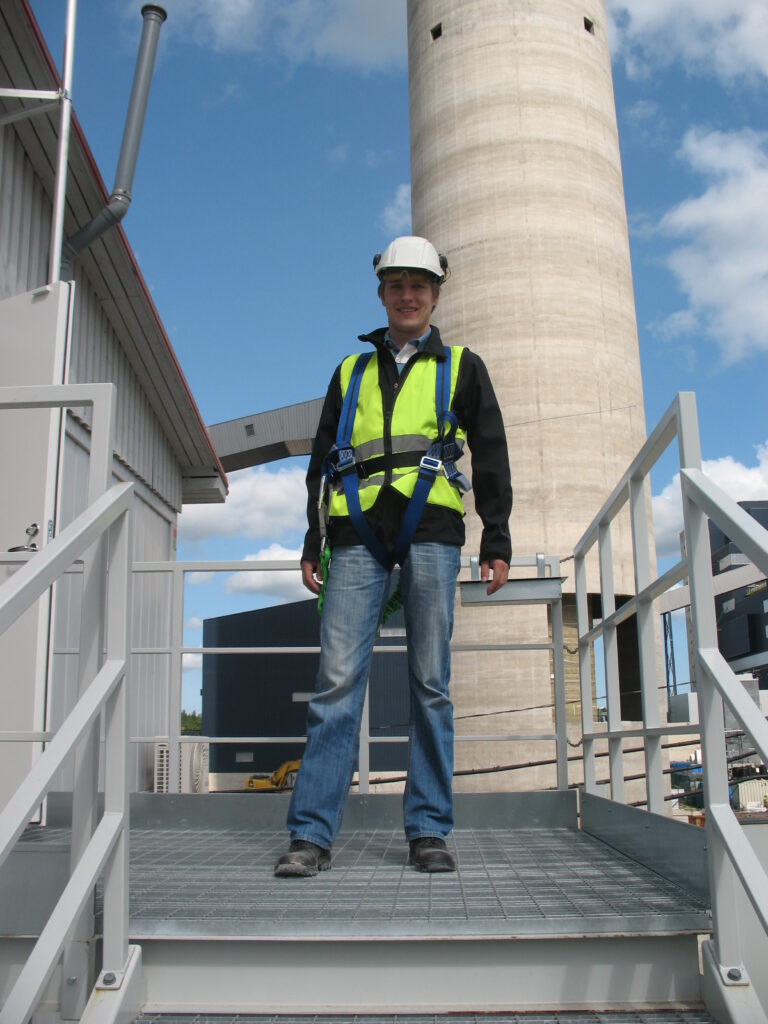
Photo: Tõnu Pihu
How did you come to oil shale?
I grew up in Lääne-Viru County and graduated from Rakvere Gymnasium. I ended up at Tallinn University of Technology purely by chance. I applied to all the major universities in Estonia, and at the other universities, my preferences were physics and mathematics. But I am quite a pragmatic person, my father is a farmer, and I thought I would choose a field where jobs were secure and the pay might be above the Estonian average.
I wanted to study shipbuilding at the University of Technology. However, I turned up at the admissions office at lunchtime, when the right people were not at the desk to provide information. The person at the desk at that moment, perhaps the cloakroom attendant, said that shipbuilding probably was not on offer, but that there were some brochures. I looked through them, saw thermal engineering, and chose that. I was also accepted to study mechatronics, but fortunately my chance choice won out. I thought thermal engineering would involve engines, but it turned out there was not much talk of engines at all. Life shows you the right direction. I wanted to earn some extra money alongside my studies and asked whether I could contribute at the Department of Thermal Engineering. They said yes. My first job was helping out on large projects where tests were carried out on oil shale boilers. In my first years at university, I spent a lot of time at the Narva power plants and their ash fields. That gave me a good overview of what the industry is like and what its environmental impact is.
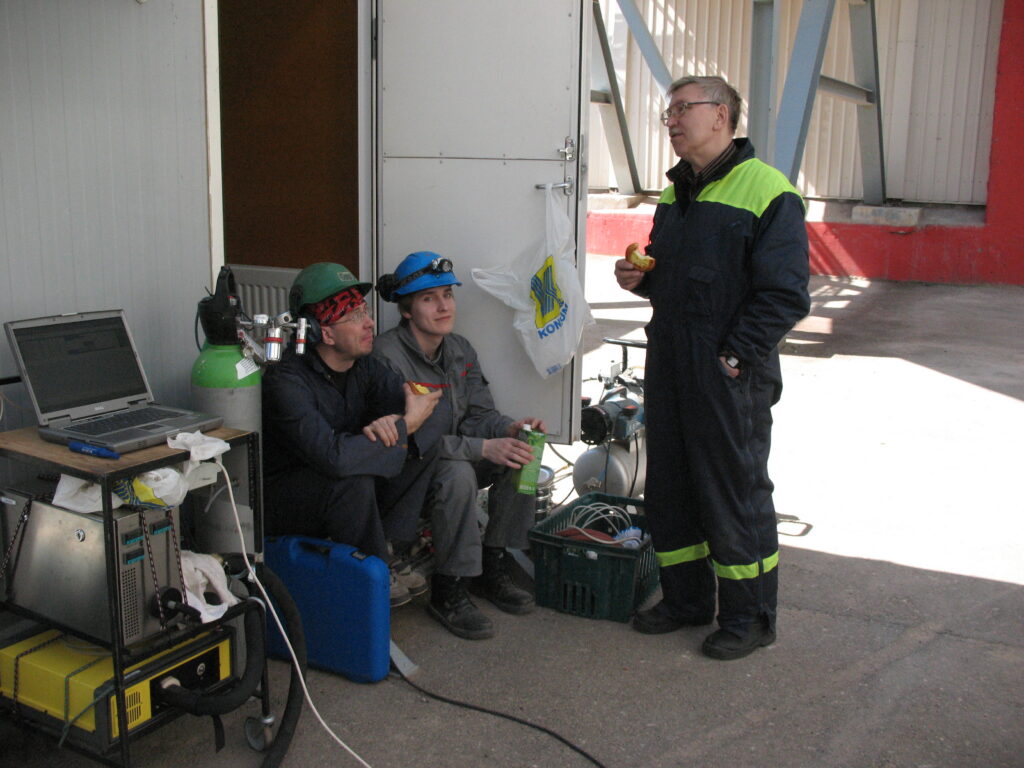
Photo: Tõnu Pihu
What has kept you working with oil shale?
Even then it was clear that our work as scientists is precisely about reducing environmental impact, and that it produces real results. We are not talking about tiny changes, but about major reductions. My predecessors studied circulating fluidised bed technology, which was introduced on an industrial scale in Estonia in 2003-2004. It reduced sulphur dioxide emissions, for example, by a factor of thousands.
Achieving something like that simply by changing combustion technology is fantastic. Elsewhere in the world, desulphurisation and denitrification equipment is needed in addition; we do not need it. However, as environmental impact is now assessed solely by CO2 emissions, oil shale’s figure is on the high side. The reason is the limestone in oil shale, which releases CO2 as it decomposes, in addition to the CO2 produced by burning the fuel. Even so, this figure is no higher for fluidised bed boilers than for coal-fired boilers, although the opposite is often claimed, and at new plants such as Auvere it is even lower. Considering that other emissions are much lower, this is a very good technology.
We are now studying new CO2 capture technologies. We have two projects under the TemTA programme, in which we are looking at how to obtain chemicals and other useful products, such as hydrogen, and how to add value to the solid material so that it is suitable for use in cement production, as a mineral fertiliser, or as a soil improver. In this way, using oil shale produces few emissions, or none at all.
I have never seen oil shale as a problem, but as an opportunity. This resource gives Estonia the chance to be independent of external factors. The geopolitical situation is very complicated today, and I would not want to be in Europe’s position. We did everything we could to stop Europe from buying gas from Russia and replaced it with American gas. Recently, the United States decided to allow Russian diesel onto its market and advised Europe to start buying Russian gas as well.
Political circumstances change quickly.
Exactly. If we are dependent and do not do what the major powers want, they simply will not supply us with fuel. The second risk is technological dependence: if something breaks in a solar panel, you may not be able to get the components, and nobody may want to repair it. So oil shale is, if anything, our good fortune.
Things can always be done better, but that is up to us. If some part of this resource is still treated as waste today, that should not be the case. The entire resource should be used across the whole value chain. For example, we have just filed a patent application for producing ternesite clinker from oil shale ash, and we came across this idea thanks to the accidents at Auvere Power Plant. Negative events can also have positive consequences.
The Auvere story still makes me sad. I once wrote about it in Riigikogu Toimetised, the journal of the Estonian Parliament. Had Auvere been built first, the conclusion would have been that fluidised bed technology is not suitable for oil shale. Yet the second-generation fluidised bed boilers built in 2003-2004 are still operating today, and nobody even knows that such problems could arise. Auvere, however, has a first-generation boiler. There were also problems at the Enefit280 oil plants, because, once again, the basic knowledge was lacking and local expertise was not valued. That is why I say Estonia must have specialists in every field. We can bring in geologists from Finland, but if they do not know our bedrock, they will still end up asking our specialists.
Is your belief in oil shale also the reason you have served on the editorial board of Oil Shale and are now its editor-in-chief?
I do have a sincere belief in oil shale, but I have always looked at it in a broader context. If most of the world’s primary energy is based on fossil fuels, and investment in them shows no sign of slowing, there is no point in thinking that this will change overnight. So we should not shut down this sector prematurely. As recently as 2018, Estonia’s electricity imports and exports were more or less in balance; today we are moving towards a situation similar to that in the rest of Europe, where primary energy imports are around 57 per cent. That means someone else produces and pollutes for us. But the world is a system of communicating vessels, and our steps do not reduce emissions globally; if anything, they increase them.
So we should produce the energy we consume here locally. After all, our eastern neighbours do not think about environmental issues in this way at all. The ideology was a nice one: Europe knew it was heavily dependent on imported fuels and sought an alternative in electrification, electric cars, and local production of wind turbines and solar panels. It was also assumed that batteries would be able to store the energy needed for the winter months. In reality, that is not the case.
But Europe failed to notice that, at the same time, China saw a very concrete business opportunity in all this. Today, China’s production capacity for wind turbines, solar panels, electric cars, batteries, and electrolysers exceeds the needs of the entire world. When energy in China costs less than half as much as it does here and labour costs are even lower, we will never be able to compete with their prices. And so Europe finds itself in a position where it does not want the old and does not have the new. Now hasty decisions are being made to replace old plants with new ones, in the hope that we will switch on gas-fired plants that we will not use for long. In reality, that will not happen. This is confirmed by the fact that subsidies for gas-fired plants are being planned for at least 15 years.
You run a department and a research group, and you are a professor. Why did you also agree to become editor-in-chief of a journal published by Estonian Academy Publishers?
I must praise the publisher’s director, Piret Lukkanen, who was very persistent. My first wish, however, was that the previous editor-in-chief, Andres Siirde, would continue, because he has done a very good job: the journal’s indicators have improved, and the number of submitted articles has grown. In truth, I have too many responsibilities. But oil shale is a subject many people do not want to see on their CVs, and I do not want to see the work of previous generations thrown into the dustbin of history in today’s political climate. I felt responsible for this field. I hope the journal will continue at the same high level and that in five years I will be able to hand it over to the next editor.
Very few international scientific journals are published in Estonia. We should preserve and value them, because achieving the status of an international journal is a long process.
Besides the editorship, you have also taken over the management of the Department of Energy Technology from TalTech Professor Emeritus Andres Siirde. What have you learnt from him, and what would you like to carry forward from his work?
Andres handed over to me both a department and a journal in very good shape. That says a great deal about him. Everything he does, he does with great passion, heart, and dedication. That is exactly the attitude to work that I want to carry forward myself.
One of his most admirable skills is his ability to give examples that help people genuinely understand complex matters and processes. It is a skill from which there is much to learn, as a lecturer, as a scientist, and as a leader.
Andres also knows how to build and maintain good relationships with people. He gets on well with all three oil shale processing companies operating in Estonia. I, too, try to maintain good and substantive cooperation with everyone. I want to build on the strong foundation he created and one day pass on the department and the journal in at least as good a condition as I received them from him.
Who publishes in Oil Shale, and who reads it?
There has been quite a big change. In the past, a great many articles came from Estonia; today they come from China. The number of articles from Jordan has also grown, because an oil shale power plant was commissioned there and they now have something to study. The Chinese are very active. China has rigorous requirements for scientific articles and its own lists of journals where to publish, so it is great that they send their articles to us. We must work hard to keep it that way. The number of Estonian articles has fallen for a simple reason: if there is no research funding for oil shale, not much research can be done in the field.
Is there hope of more funding in the future?
I hope so too. But a great deal of damage has been done. The oil shale field has been demonised, and young Estonians are not keen to take up oil shale research. People think it is something terrible, but at the end of the day it is one of the possible choices.
Fields have changed over the years. Could the journal in future also cover energy technology, the circular economy, or environmental technologies more broadly?
These are all interconnected, and there have already been such articles, on ash reuse, for example. Life cycle assessments have also appeared, showing that when you look at the whole chain, oil shale can be valorised in a very environmentally friendly way. Articles like these are very welcome.
I would also like to see a socio-economic article examining the changes in the sector since Estonia regained independence, why and how they have had an impact, and where we stand now, together with an outlook for the future in the context of Estonia, Ida-Viru County, and the world. Charity begins at home. If we do not even share common values when it comes to human life today, why do we think we will agree on the environment? In the meantime, it was promised that tourism and the Just Transition Fund would save Ida-Viru County, but that is not how things have turned out. Rather, we should think about how to reduce the environmental impact already caused without harming the local community. If we shut down the sector and replace it only with imported fuels, prices will rise and local people will be left without work.
Looking ahead, we also need to look beyond Europe. The development of the world’s energy sector and industry is strongly influenced by the United States, China, India, and Russia, whose interests and choices may not coincide with ours. If countries cannot agree even on protecting human life and on preventing and ending wars, we cannot expect a shared understanding of and responsibility for environmental goals to emerge on their own. This does not diminish our obligation to reduce our own environmental impact, but it does force us to ask whether our decisions reduce that impact at a global level as well, or simply move jobs, production, and their impact elsewhere. These are exactly the kinds of links between the environment, technology, the economy, and society that the journal could explore more than it has so far.
There are few young people in Estonia, and some of them leave. How can more young people be drawn to the oil shale field?
We need to start in schools and talk honestly about both the problems and the opportunities. There is no point in waiting for a ship with blue sails, and perhaps young people’s knowledge of history needs refreshing. When we look at what is happening in Ukraine, the situation seems similar to the one during the Second World War, when we waited for America to come to our aid. It did not come. Everyone saves themselves, and in that context we have to consider whether switching to something else is sensible.
I am not against nuclear energy, because I know how much coal, oil shale, and oil there is in the world. The only energy source with fuel reserves lasting tens of thousands of years is nuclear energy, and we will get there in time. But over the next 30 or 50 years it does not make sense. If the rest of the world wants to switch quickly to gas and nuclear energy, the construction costs of plants will rise and their availability will decline. We could take our time over the next 30 to 50 years, and if by then we are told that oil shale must not be used, then we will not use it. Otherwise, we will make ourselves dependent on technology and nuclear fuel coming from third countries whose policies we may not like. And afterwards we could be blackmailed over nuclear waste, because it has to be stored somewhere.
Today, the Norwegian model should be our example: the country that invests most in renewable energy in Europe is Norway, and the largest producer of fossil fuels is also Norway.
How long will Estonia’s oil shale last?
When I started studying at Tallinn University of Technology, we were told it would last for the next 50 years. And today I can say exactly the same: for the next 50 years.
Is that because not so much has been used up, or because technologies have changed?
Both. Extracting oil shale and opening new mines can be challenging in some cases, but mining technologies are changing too. This resource is still something that can and should be valorised and used.
Of course it affects local residents; I do not dispute that. But we need to understand how many people it affects and find solutions. In the same way, there are settlements along the Rail Baltica route, and the necessary concessions have been made there.
Presumably there is no escaping new ash heaps?
We might be able to avoid them. My dream is that we will put the ash to use after all. Here, too, political decisions have worked against the development of the field. Europe does not fund research on fresh ash, because such research is seen as an attempt to find ways to keep the existing industry going. Money is only given for studying ash that has already been deposited. This is short-sighted, because if you can obtain the ash in dry form, it can be used in a wide range of fields. Political ambition is needed here as well.
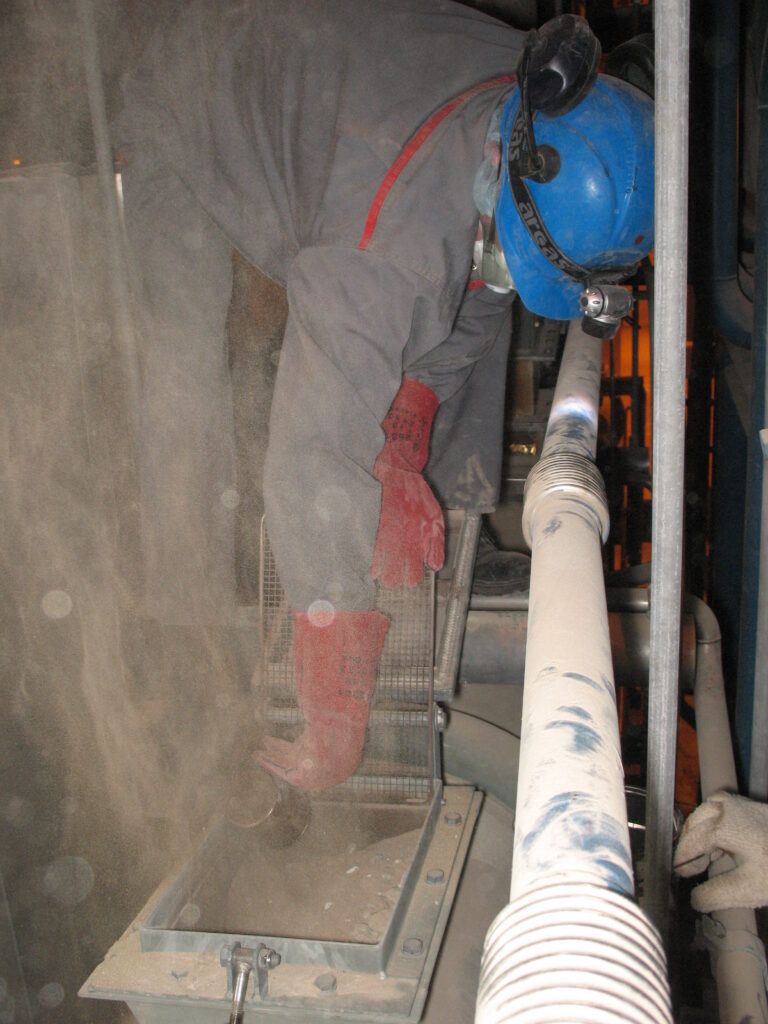
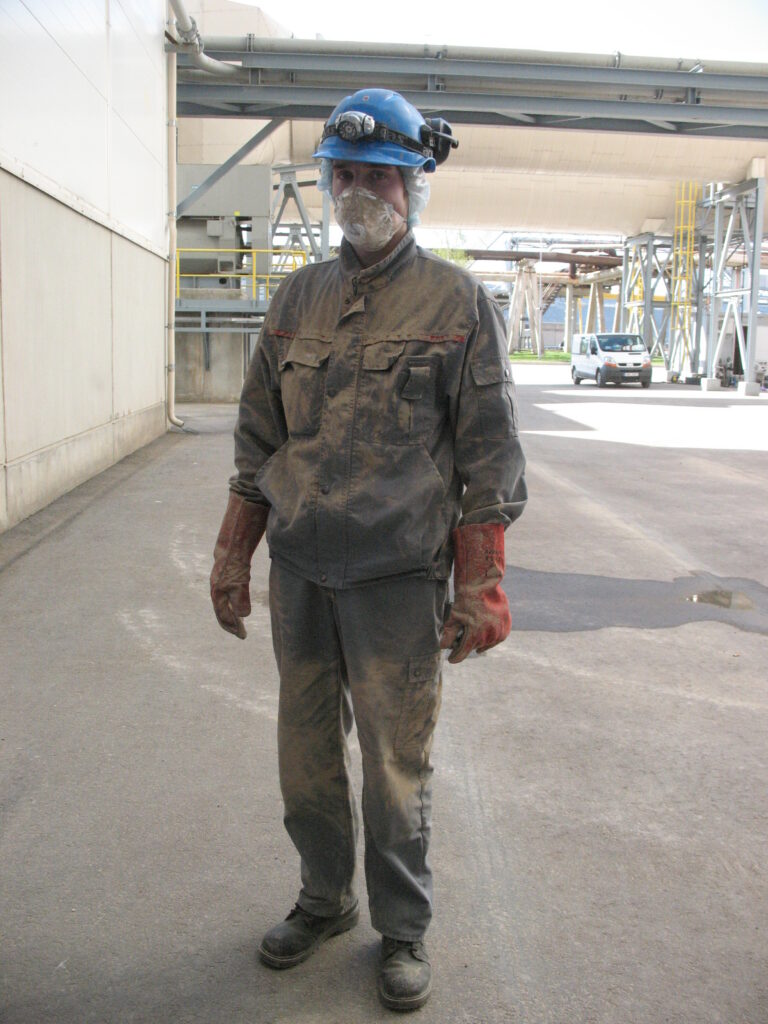
Taking ash samples during the same test series at the Balti Power Plant in spring 2010.
Photos: Tõnu Pihu
What would you advise a researcher, young or more experienced, who is considering submitting an article to Oil Shale? Why there?
I definitely recommend it. On the one hand, it may be our weakness, but on the other, it is our strength that we are a niche journal where oil shale articles are gathered together. You can find the latest oil shale research there in concentrated form. There are thousands of scientific journals in the world, and even AI does not always help you find the articles you need quickly. In our journal, all the articles on a narrow topic are in one place, and the journal is read by the leading researchers in the field.
The editor-in-chief’s term is five years. Where will the journal be by then?
My ambition is for us to become a Q1 journal. That will take a lot of work. As I also told the Board of the Academy, it is a high ambition, and if I do not achieve it, they will have a good opportunity to choose a new editor-in-chief in five years.
What does Q1 mean?
Within their respective fields, scientific journals are divided into four groups, or quartiles, from Q1 to Q4, based on citation metrics. Q1 means that a journal is among the top 25 per cent in its field in the relevant ranking. It indicates the journal’s scientific impact, but it is not an assessment of the quality of each individual article. Competition to publish in leading journals is fierce, and besides the quality of the research, its novelty and suitability for the journal’s scope also count. Our goal is to increase the international visibility and citation impact of Oil Shale and move higher in the rankings. At present, the journal is in Q3.
Will the journal still be printed on paper in five years?
I hope so. I am an old-school person; I like reading on paper.
In five years, will articles be written by AI or still by humans?
Still by humans. Oil Shale’s guidelines also state that AI may be used to improve the language of a text, but a scientific publication must not be produced with AI. It may be used to some extent in interpreting results, but the research itself must be done by scientists. Otherwise, there would be no need for scientists.
Will the oil shale field be more visible in Estonia in five years thanks to the journal?
Certainly. The publisher has already significantly improved visibility, and media coverage helps results reach the wider public. I hope people will understand what we do.
The journal Oil Shale
- Founded in 1984 as a joint journal of the Academies of Sciences of the USSR and the Estonian SSR; its first editor-in-chief was Ilmar Öpik.
- Originally published in Russian with English summaries, it is now published in English.
- Published by the Estonian Academy of Sciences in cooperation with Tallinn University of Technology and the Geological Survey of Estonia; publication has been managed by Estonian Academy Publishers since 1999.
- Published four times a year, with open access and articles published under a CC BY 4.0 licence.
- All articles undergo international peer review.
- Indexed in Web of Science (since 1994), Scopus, DOAJ, and other databases.
- Impact factor 1.9 and CiteScore 2.5 (2025).
- Alar Konist has been editor-in-chief since 22 October 2026; his predecessor, from 2019 to 2026, was Professor Emeritus Andres Siirde.
Who is Alar Konist?
Alar Konist (born in 1985 in Vinni) began studying thermal engineering at Tallinn University of Technology in 2004 after graduating from Rakvere Gymnasium, and in 2006 started working at the Department of Thermal Engineering, now the Department of Energy Technology. He defended his doctoral thesis on the environmental aspects of oil shale power engineering in 2013 and was a postdoctoral researcher at Brown University in the United States in 2014-2015. He became a professor in 2018. He represents Estonia in the International Energy Agency’s Technology Collaboration Programme on Fluidized Bed Conversion and received the President’s Young Scientist Award in 2021.
Interview by Airi Kaunissaare.
On 13 October 2026, the Board of the Estonian Academy of Sciences appointed Professor Alar Konist of Tallinn University of Technology (TalTech) as the new Editor-in-Chief of the scientific journal Oil Shale, for a five-year term beginning on 22 October.
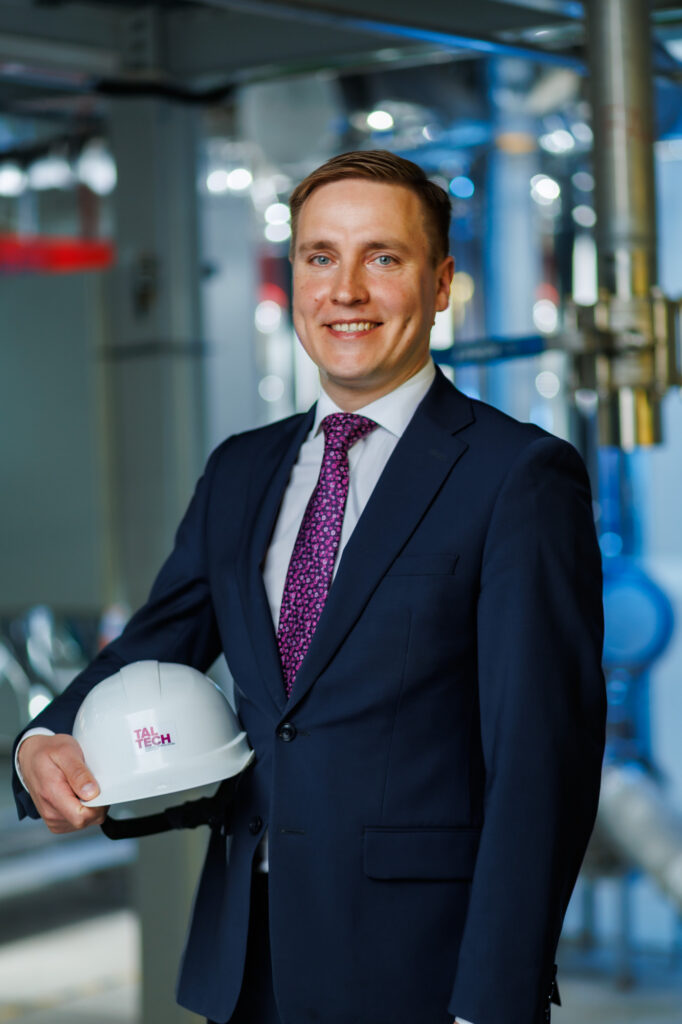
Alar Konist is Director of the Department of Energy Technology, Tenured Full Professor and Head of the Research Group of Sustainable Energy and Fuels at TalTech. His research focuses on areas including oil shale and biomass valorisation, carbon capture and utilisation technologies, and the development of sustainable energy systems.
Konist is well acquainted with Oil Shale, having served on its Editorial Board for several years. As the new Editor-in-Chief, he aims to increase the journal’s international visibility, attract more high-quality research papers, and streamline its editorial and publication processes.
“Alar Konist has an ambitious and well-considered vision for the journal’s development. Of particular importance is his commitment to raising its scientific standards and strengthening its editorial team,” said Marek Tamm, Vice-President of the Estonian Academy of Sciences and Chair of the Publishing Council.
The Estonian Academy Publishers extends its sincere gratitude to the outgoing Editor-in-Chief, Professor Andres Siirde, for his many years of dedicated work in developing Oil Shale. Professor Siirde has led the journal since 2019, having previously served as its Deputy Editor-in-Chief from 2008 to 2018.
We wish Professor Konist every success in his new role!
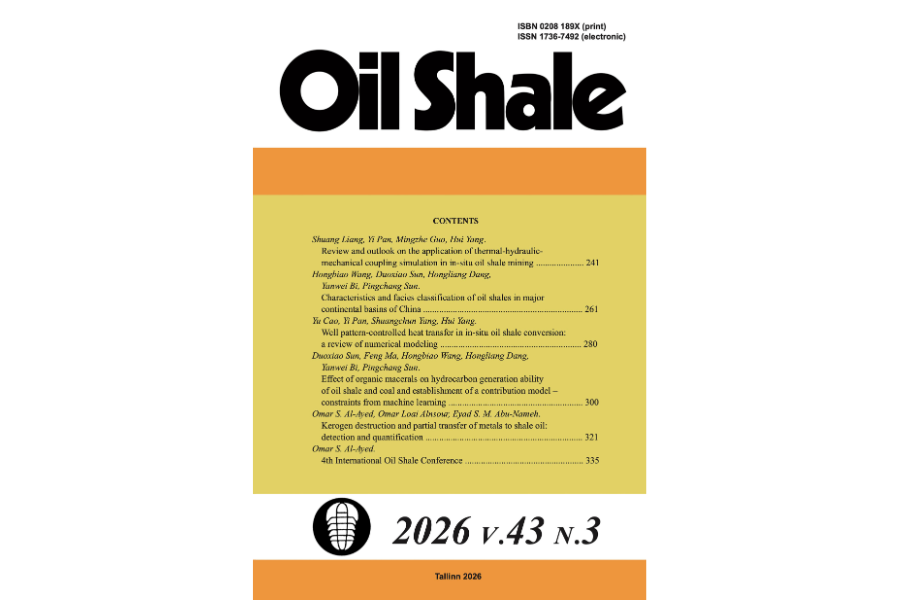
OIL SHALE
The new issue of Oil Shale contains five articles, four of which are authored by researchers from China and one by researchers from Jordan.
The article by the Jordanian researchers, ‘Kerogen destruction and partial transfer of metals to shale oil: detection and quantification’ investigates the transfer of various metals, including Fe, V, Ni, Mn, and Pb, into shale oil during the pyrolysis of oil shale from the Attarat deposit. The experiments were conducted under a nitrogen atmosphere at different heating rates. The results demonstrate that the transfer of these metals into shale oil depends on the heating rate applied during oil shale pyrolysis.
Two of the articles by Chinese researchers are review articles. The article ‘Review and outlook on the application of thermal-hydraulic-mechanical coupling simulation in in-situ oil shale mining’ reviews the application of thermal-hydraulic-mechanical coupling simulations in in-situ oil shale mining, summarizes the relevant coupling theories and mathematical models, and analyses their significance for heat-injection mining, prediction of effective pyrolysis zones, and analysis of ground-surface deformation. It also summarizes key applications and future prospects, providing theoretical and technical references for optimizing in-situ oil shale mining and laying a foundation for subsequent research on thermal-hydraulic-mechanical-chemical coupling.
The second review article by Chinese authors, ‘Well pattern-controlled heat transfer in in-situ oil shale conversion: a review of numerical modeling’, systematically reviews the current state of research on heat transfer during in-situ oil shale conversion. It clarifies the underlying heat-transfer mechanisms and discusses thermal-hydraulic-mechanical coupling models and recent research progress in in-situ extraction under well-pattern control.
We also recommend reading the other articles published in this new issue.
Contents and full texts of articles: Oil Shale, 2026, Vol. 43, Issue 3.
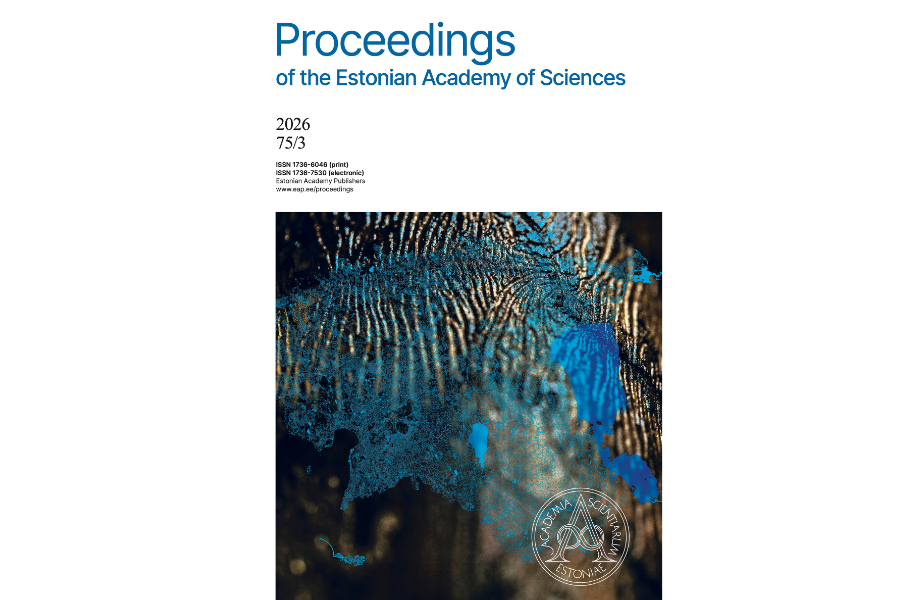
PROCEEDINGS OF THE ESTONIAN ACADEMY OF SCIENCES
The rapid development of digital technologies, the broad adoption of artificial intelligence, global sustainability challenges, and changing forms of work have led us to an era in which management can no longer be limited to efficiency, growth, and competitiveness alone. Increasingly important is to understand how to design and lead organisations in a way that simultaneously supports economic performance, human well-being, ethical decision-making, and environmental responsibility.
The journal explores a wide range of topics related to sustainable management in the digital era. It addresses people management practices, sustainability-related tensions in platform companies, challenges in human resource management and employee well-being, as well as the impact of digitalisation on employment and workplace risk assessment. The contributions approach sustainable management from multiple perspectives. They examine, among other topics, value-based leadership practices, managerial interventions in response to unethical workplace situations, psychological risk management in the digital era, and other emerging challenges in contemporary business management. Together, the articles highlight the interdisciplinary nature of sustainable management and contribute to a better understanding of how organisations can respond to the complex challenges of digital transformation and the transition towards a more sustainable economy. These issues are important not only for the effective and responsible functioning of organisations, but also for strengthening societal trust and supporting responsible economic development.
The current issue offers valuable insights for researchers, practitioners, policymakers, and all those interested in sustainable management, digital transformation, and responsible organisational practices.
Contents and full texts of articles: Proceedings of the Estonian Academy of Sciences, 2026, Vol. 75, Issue 3.
Additional information:
Subscribe to journal alerts on our website to receive notifications of new issues.
Estonian Academy Publishers welcomes new manuscripts. Find more information here.
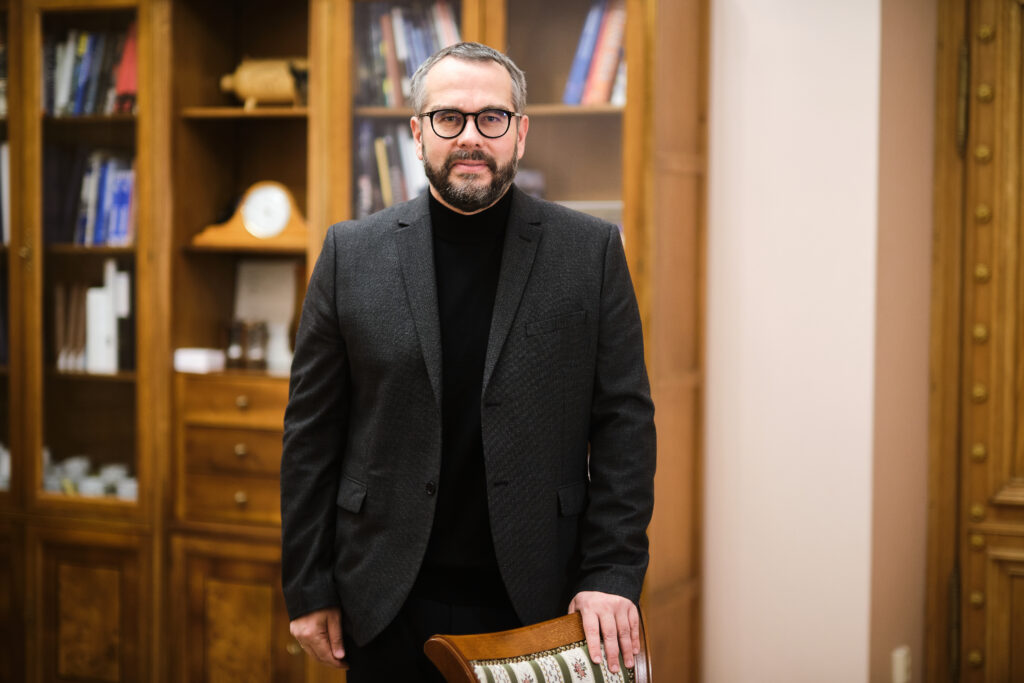
On 5 May 2026, the Presidium of the Estonian Academy of Sciences confirmed the new composition of the Publishing Council of the Estonian Academy of Sciences.
The Council is chaired by Marek Tamm, Academician and Vice-President of the Estonian Academy of Sciences.
The membership includes:
- Mart Saarma, Academician and President of the Estonian Academy of Sciences
- Anne Kahru, Academician and Secretary General of the Estonian Academy of Sciences
- Piret Lukkanen, Director of Estonian Academy Publishers
- Jüri Allik, Academician, Department of Humanities and Social Sciences
- Jarek Kurnitski, Academician, Department of Informatics and Technical Sciences
- Karl Pajusalu, Academician, Department of Humanities and Social Sciences
- Maarja Öpik, Academician, Department of Natural Sciences and Medicine
The newly appointed Publishing Council brings together leading representatives of the Estonian academic community across disciplines, reflecting the publishers’ commitment to maintaining high scientific standards and supporting the dissemination of quality research.
A former member of the Editorial Board of the Oil Shale, grand old man of oil shale chemistry, researcher and scientist, professor emeritus of the Tallinn University of Technology Leevi Mölder celebrated his 90th birthday on 4 July 2023.
Leevi Mölder was born in Ida-Viru County, the oil shale region of Estonia. All his life has been connected with and dedicated to this natural resource of his home country.
In 1957 Leevi Mölder graduated from the Tallinn University of Technology as an engineer of fuel chemistry and stayed with his alma mater, starting as the head of laboratory (1957–1959). In 1963 he defended the Ph.D. thesis ‘Characteristics and Application of Molecular Complexes of Phenols for Shale Oil Separation’. In 1964 he became a docent, in 1973–1985 he was a professor and head of the Chair of Organic Chemistry, and in 1992–2000 again a professor. In 1983–1988 he headed the laboratory and in 1988–1994 the Department of Oil Shales and Shale Oil at the Institute of Chemistry of the Estonian Academy of Sciences. Since 2000 Mölder is professor emeritus.
The main part of his life’s work has been devoted to technical education. He has succeeded in coupling his intense pedagogical and organizational activities with successful research. Oil shale processing and oil shale chemistry are the key spheres of his scientific interests.
Leevi Mölder’s research has focused on the thermodynamic properties of non-electrolyte solutions and their applications in technological processes, especially in the processing of oil shale liquids and the separation of phenols from oil shale. He has improved methods for separating resorcinol derivatives from oil and water, as well as procedures for synthesizing biodiesel. Additionally, he has developed methods for predicting the properties of petroleum product mixtures and for identifying fuel additives.
Mölder’s scientific contribution is more than two hundred scientific publications, including textbooks on organic chemistry and fuels. He is a co-author of the Russian-Estonian and English-Estonian-Russian dictionaries of chemistry, as well as numerous popular science works. Professor Mölder has been awarded many honours for his professional achievements, such as Mente et Manu (1983, 1993) of the Tallinn University of Technology, Paul Kogerman Memorial Medal (1987) of the Estonian Academy of Sciences, 2000 Outstanding Scientists of the 20th Century (1999) and Outstanding People of the 20th Century (2000) issued by the IBC, Cambridge, the American Medal of Honor (2002) and the Order of the White Star, 4th Class (2004).
Recently, Leevi Mölder published an essay titled ‘Gens una sumus’. The following is an excerpt from the essay that reveals Mölder’s dedication to his profession as an educator and researcher. The essay appeared in Mente et Manu, the journal of Tallinn University of Technology.
Gens una sumus – we are one family. This guiding principle adopted by the chess community should be respected also among the academic staff at the university. Among all those who have dedicated themselves to teaching and conducting research, regardless of age and job title. A good educator cannot exist without being a researcher, just as a good researcher cannot do without teaching.
Being a teacher, a university lecturer, with all its charms and pains, is perhaps one of the most challenging professions. It requires not only a broad perspective, knowledge of the subject, communication skills, balance, and empathy but often also the patience and perseverance of a plow ox.
Yet, there is nothing more pleasant than teaching those who want to learn. Then, teaching becomes an intellectual and emotional pleasure – the enthusiasm of young minds inspires the educator, adding freshness of thought and joy of life. Teaching requires the ability to articulate the essence of problems in a clear and smooth language. Therefore, teaching contributes significantly to thinking in science. Indeed, teaching and research are inseparable, like duality.
Teaching requires innate qualities and a unique talent from the educator. One does not learn to be a teacher; one is born a teacher. The absence of this talent cannot be compensated for by dull work. Yet, talent alone does not exempt one from hard work. Knowledge acquired earlier quickly becomes outdated. Thus, an educator must continue learning throughout life, discovering new things. Those who fail to do so, inevitably fall behind in life. Teaching is a process with long-term effects. The teacher influences the future without knowing how far-reaching their impact is.
Research requires persistence and analytical ability from the practitioner. And it also requires emotion and passion. Research demands a million other qualities. Without them, there is no research.
The Editorial Board of the Oil Shale and other colleagues wish Leevi Mölder good health, happiness, and many more years of successful and creative accomplishments.
Photo: collection of Tallinn University of Technology
With deep sadness, we announce that on December 31, 2023, Aili Kogerman, the first and long-time executive editor of the Oil Shale (1990–2008), passed away.
Aili Kogerman graduated from the Tallinn Polytechnic Institute (now Tallinn University of Technology) with a degree in chemical technology of fuels in 1956. In 1966, she defended her candidate degree in chemical sciences (equivalent to a PhD today) on the topic “Fiber-Forming Copolymers of Acrylonitrile and Methylacrolein”.
After graduating, from 1956 to 1960, Aili Kogerman worked as a chemical engineer in the oil shale industry in Kohtla-Järve. In 1960, she began her career as a researcher at the Estonian Academy of Sciences, continuing as a senior researcher until 1998.
Alongside her scientific work, in 1990 Aili Kogerman started working as the executive editor of the Oil Shale. Through her active involvement, the Oil Shale became a truly international English-language journal on oil shale, especially during the early years of Estonia’s independence. The initial eight years posed financial challenges, with the journal relying on donations from Estonian oil shale companies. Since January 1999, the Oil Shale has been published by the Estonian Academy Publishers.
Kogerman was motivated by a strong belief in the uniqueness of the Estonian oil shale industry, the global significance of Estonian oil shale science, and the opportunity to publish and disseminate it worldwide through her journal. Largely thanks to Kogerman’s initiative, the Oil Shale was indexed in ISI Journal Publications in 1994, including the esteemed Current Contents.
Aili Kogerman retired from her position as the editor-in-chief in 2008.
Aili Kogerman was also notable for popularising household and consumer chemistry. She authored several books in this field. As the daughter-in-law of Paul Kogerman, the founder of Estonian oil shale chemistry, Aili contributed to introducing Paul Kogerman’s life and works through various articles and as a compiler of the memorial book “Paul Kogerman ja tema aeg” (“Paul Kogerman and his time”, in Estonian).
Aili Kogerman was honored with the Koosmeele Award (the Concord Award of the Open Estonia Foundation) in 1999 for her contributions to the development of an open society in Estonia and beyond, fostering mutual understanding among people living in Estonia and building a common future. In 2000, Kogerman was awarded the Order of the Estonian Red Cross, II Class.
The Oil Shale expresses its condolences to Aili Kogerman’s family and remembers her as a cherished colleague.
Photo: Chemist Kogermann, Aili (VK F 1077:1 F); Võrumaa Muuseum, http://www.muis.ee/en_GB/museaalview/1075106
The Al-Balqa Applied University in Jordan is planning to organize its 3rd International Oil
Shale Conference (BAU-OSC-3) from 17 to 19 October 2023 in Jordan. The Conference
was deferred from being organized in 2021 due to the pandemic, COVID-19.
Since then, no conferences or workshops have been organized solely on oil shale research
advancement and updates. This Conference would provide a platform for researchers,
technologists, businessmen and decision-makers to meet in one place.
The Conference will cover recent trends in oil shale research and application and a wide range
of topics in oil shale knowledge, in addition to other related subjects such as:
• Oil Shale Processing
• Oil Shale and Shale Oil Properties
• Chemistry and Geochemistry
• Geology and Stratigraphy
• Modeling and Catalysis
• Chemicals from Shale Oil
• Shale Oil Upgrading
• Combustion and Environmental Impact
• Advances in Oil Shale Retorting Technologies
• Mining and Mining Technologies
• Oil Shale, Semicoke and Ash Volarization
• Socioeconomic Impact and Policy
• Resource Evaluation
• Assessment of Oil Shale Options
• Groundwater Control and Management
• Health and Environmental Risk
• Economics and Finance
Scientists from the Department of Energy Technology, Tallinn University of Technology will contribute by participating in the work of the Scientific Committee.
The Conference website is https://www.bau.edu.jo/conf/oilshale/Home.html on which the important
information regarding topics, important dates, fees, visa requirements, etc., is provided. With any
additional information required, the researcher may write directly to the Chairman of the Conference
through the Conference email: bau.oilshaleconf@bau.edu.jo
We announce with deep sadness that on 2 January 2023, Academician Ülo Lille, a Grand Estonian Chemist, passed away. His death is a great loss to the Estonian scientific community. His outstanding scientific results substantially contributed to the field of active bioregulators, such as prostaglandins, and even more fundamentally, to the chemical nature and structure of the Estonian oil shale kukersite.
Ülo Lille was born on 16 September 1931 in Pärnu County, to a farmer family. In 1950 he graduated cum laude from Rapla Secondary School and in 1955, also cum laude, from the Department of Chemistry and Mining, Tallinn Polytechnic Institute (now Tallinn University of Technology). Thereafter he worked two years as foreman and technologist at Kiviõli Oil Shale Chemical Integrated Plant. In 1957–1959 Ülo Lille was enrolled on a postgraduate programme of Tallinn Polytechnic Institute and then got a position of senior researcher in the newly established Oil Shale Institute in Kohtla-Järve.
In 1960 Ülo Lille defended the Candidate degree (now PhD) in pyrolysis of oil shale. He pioneered the application of spectral methods and gas chromatography in research of the composition and genesis of oil shale.
In 1973 Ülo Lille defended the Doctor degree in Chemistry (Doctor of Sciences) on alkyl resorcinols. In 1975 he started to work at the Institute of Chemistry of the Estonian Academy of Sciences as a Head of Laboratory and later a Head of Department of Prostanoid Chemistry. He is a pioneer of
a new topic – chemistry, biochemistry and technology of prostaglandins in Estonia. Under his supervision the biotechnology of producing prostaglandins was developed and introduced at the Pilot Plant of the Institute, and also the asymmetric total chemical synthesis of prostaglandins was initiated.
In 1983 Ülo Lille was elected a member of the Estonian Academy of Sciences, and in 1984 he got a professorship at the Academy.
Ülo Lille has published more than 200 scientific publications. His last article “From the molecules of resorcinolic lipids to alga G. Prisca globular colonies in kukersite microfossils: a multiscale simulation study“ appeared in Oil Shale in 2020 (Vol. 37, No. 4, pp. 281–287). In this article, he is describing the oil shale kerogen as follows: “The term “kukersite“ was first used by Prof. M. Zalessky from St. Petersburg in 1917. This term is currently used for all Ordovician (formed 500 million years ago) kerogens. Prof.
M. Zalessky interpreted the micro particles found in kerogen from Kukruse as a remnant from the organism Gloeocapsamorpha Prisca’ks. … The image of a microorganism Graptolit from the Ordovician period is on the front cover of our Oil Shale journal. … It was essential to study together the products of thermal destruction of kerogen and the formed phenols with all contemporary methods”.
On the basis of his work, and also of Prof. Blokker from the Netherlands a model of the primary structure of kerogen – the Lille-Blokker model – has been developed. Ülo Lille studied also the 3D structure of kerogen particles for a particle C421H638O44S4NCl with MW 6581 optimizing the structure by
MM+ computational modelling. He got a good coincidence of the model with
13C NMR spectral data.
For his outstanding work Ülo Lille has been honoured with many awards. The following is to name some of these. In 1987 he and his research group was awarded the Estonian State Award on Science for the developments in prostaglandin research and production; in 1991 the Estonian Academy of Sciences honoured him with the Academy Medal; in 2001 he was honoured with the Order of the White Star from Estonian President; in 2011 he was given the Lifetime Achievement Award for Science and Development from the Estonian State.
The Oil Shale journal joins in grief with the family of Academician Ülo Lille and will remember him as a heartfelt colleague, who was always happy for the achievements and progress of younger colleagues, understanding well that science is driven by ideas rather than by administrative bureaucracy.
Oil Shale has its reference templates available in many of the most popular reference management software products, such as Zotero, Mendeley, Papers etc. These software products support Citation Style Language styles. Using citation plug-ins from these products, authors only need to select the appropriate journal template when preparing their article, after which citations and bibliographies will be automatically formatted in the journal’s style.

|

|